
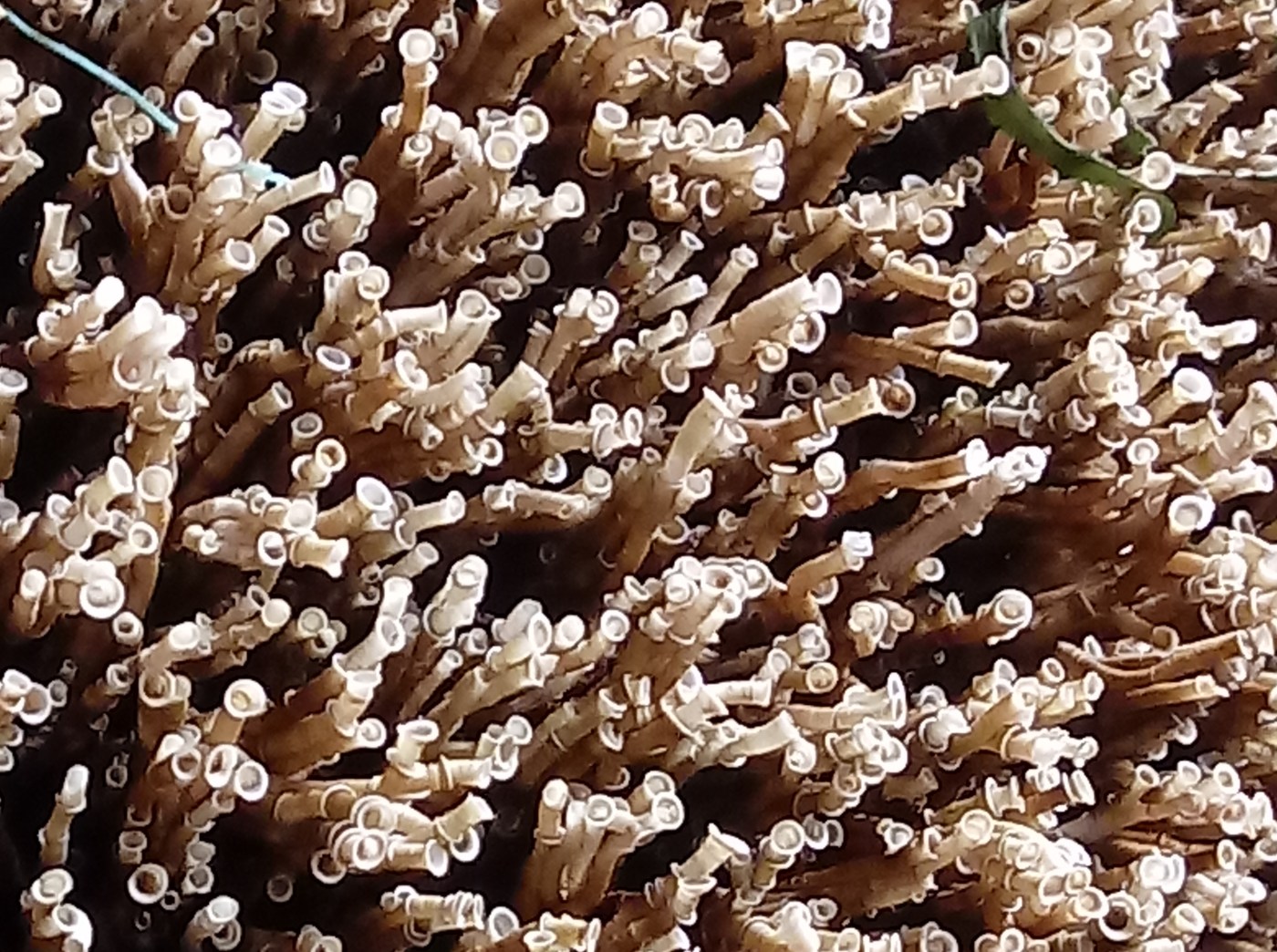
On a still morning, fishing into the cliffs – and, if your fishing buddy would stop chatting, whistling and bumbling his great boots about – you can hear the Bream munching away on the Coral.
Coral? No. It’s just what Nelson locals have always called it. Coral are colonies of identical individual polyps that secrete calcium carbonate to form a hard skeleton (1). Phylum=Cnidaria. Our guys are worms. Phylum=Annelida.
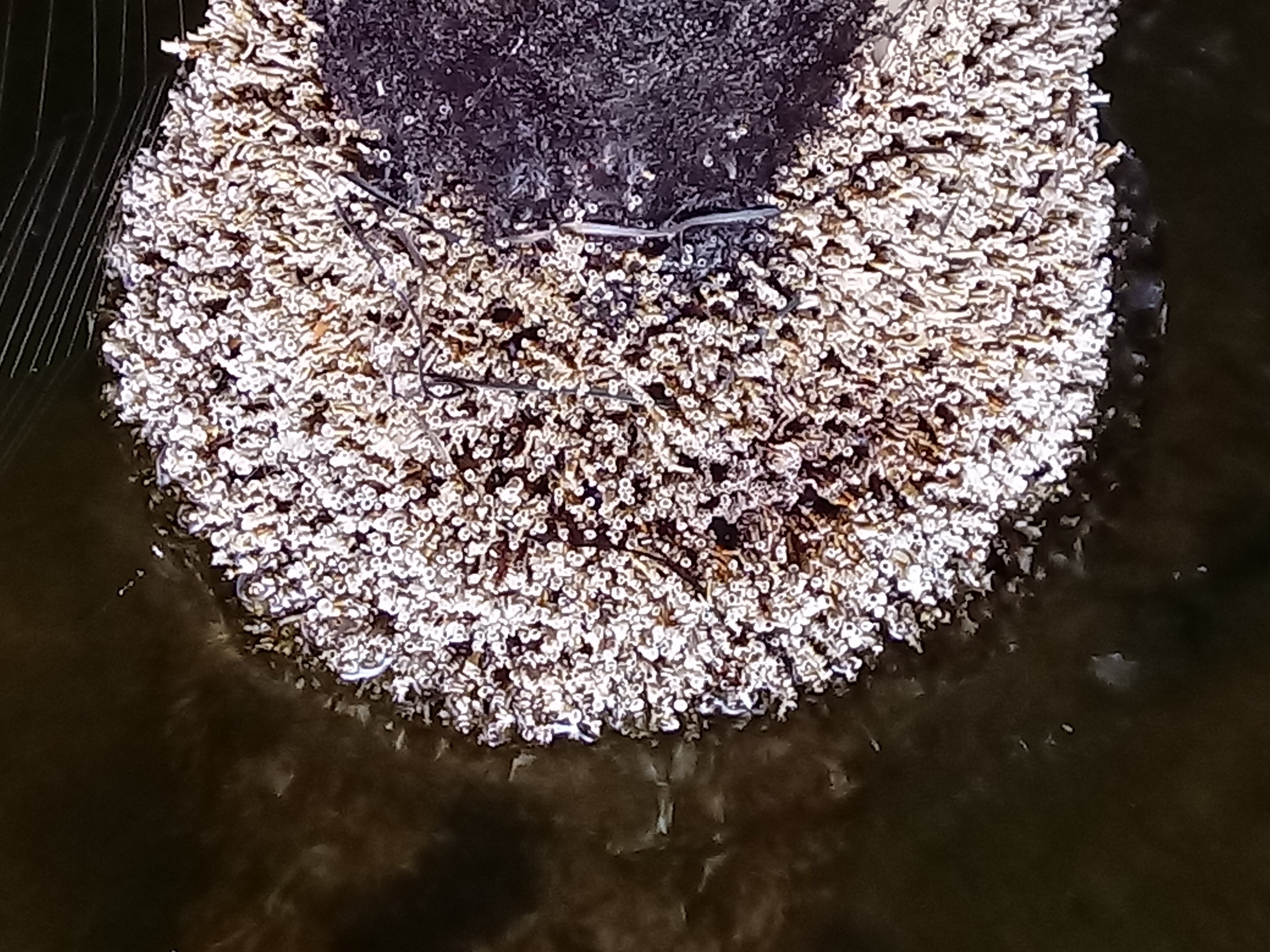
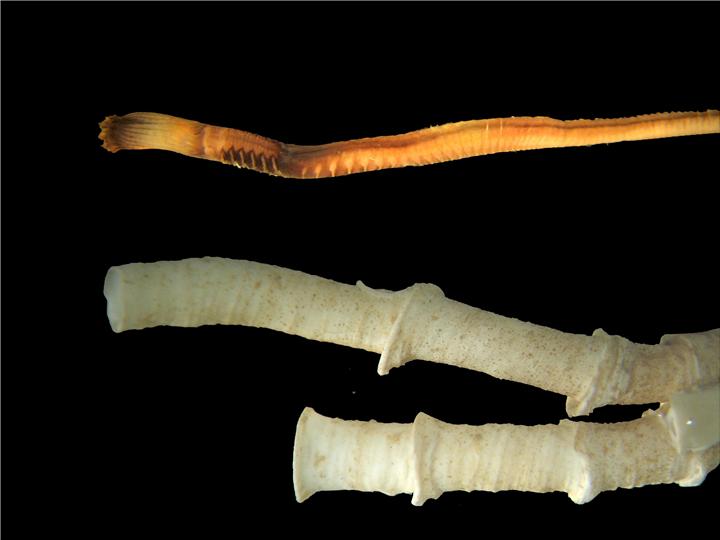
They are the Australian Tubeworm (Ficopomatus enigmaticus). Enigmaticus is from the Latin aenigma (= puzzling, ambiguous, inexplicable).(2) There seems to have been some argument about where this tubeworm originated, maybe that’s the puzzle. Most have settled on Australia as the worm’s home.
Whatever they’re called, they can be a nuisance. They attach to boatshed poles and help to wear them away. They need to be cleaned off boat bottoms from time to time. Try motoring along with 5 Cm of crusty worms attached! They are regarded as a damaging invasive species in many parts of the world.
The tubeworms are filter feeders, gathering particles and micro-organisms from the water and transporting them to their mouths with cilia on their gill plumes. Their mouths can be sealed with a spiny covering. Maybe this feeding habit explains why there always seems to be more coral on the upstream side of the boat where they would get more water flowing by.
They reproduce sexually, releasing eggs and sperm into the water during spawning. They are hermaphrodites, changing sex from males to females. The older, larger worms in a colony are generally female. Their lifespan is 4 to 8 years.(3)
Here’s a trick my fishing buddy showed me. Sneak up on some coral and give them a little tap with your paddle. Hey presto – the coral changes colour as they pull their heads in and shut their doors.
REFERENCES
- Coral – Wikipedia
- List of Latin and Greek words commonly used in systematic names – Wikipedia
- https://en.wikipedia.org/wiki/Ficopomatus_enigmaticus
Words by M Styles
 Nelson Coastcare