
Nelson and the nearby Lower Glenelg National Park are home to a dozen or so species of wattle. They all have yellow flowers but they are easy to tell apart with just a few clues. Here are the ones you are most likely to find.
BLACKWOOD (Acacia melanoxylon)
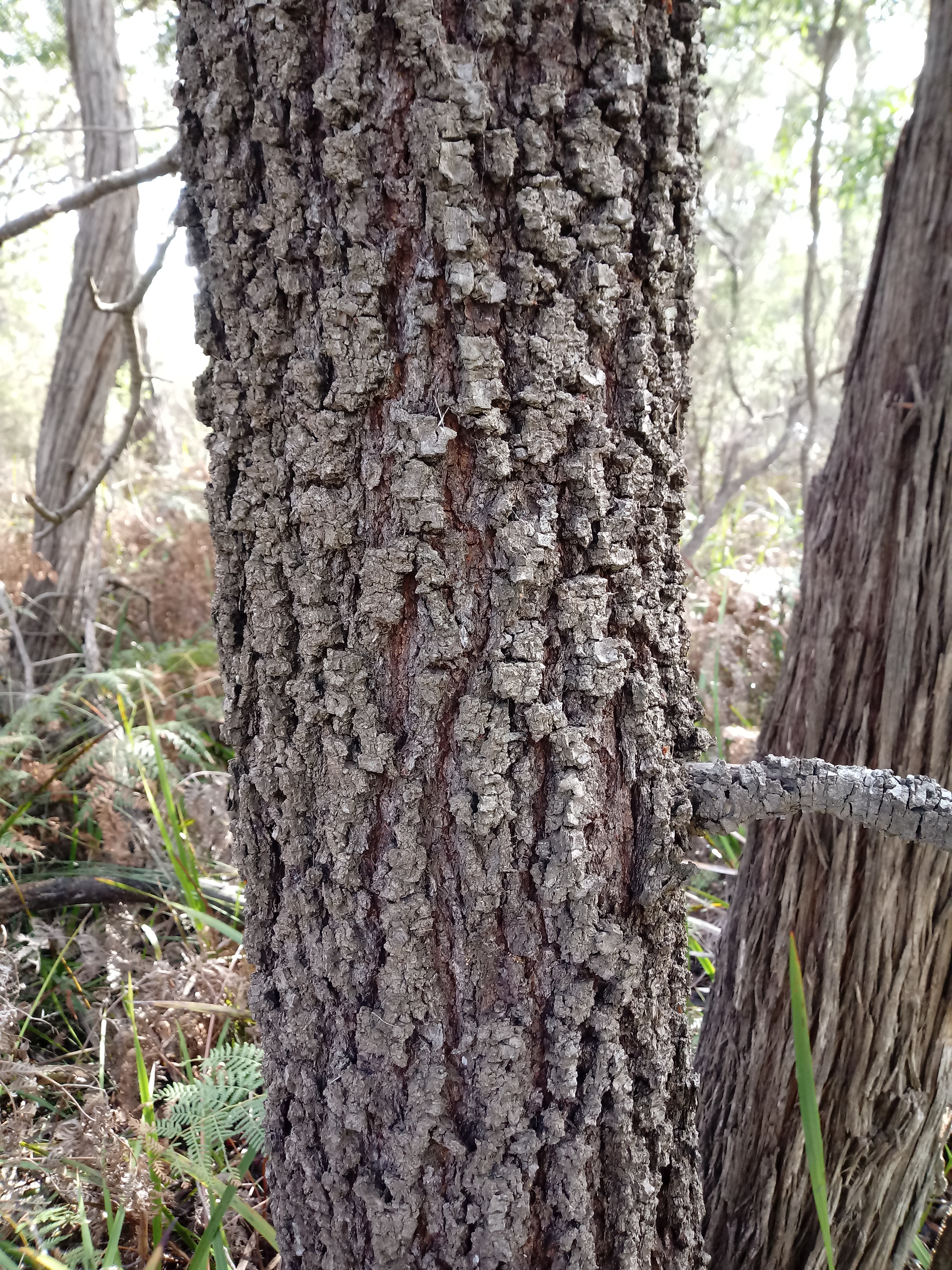

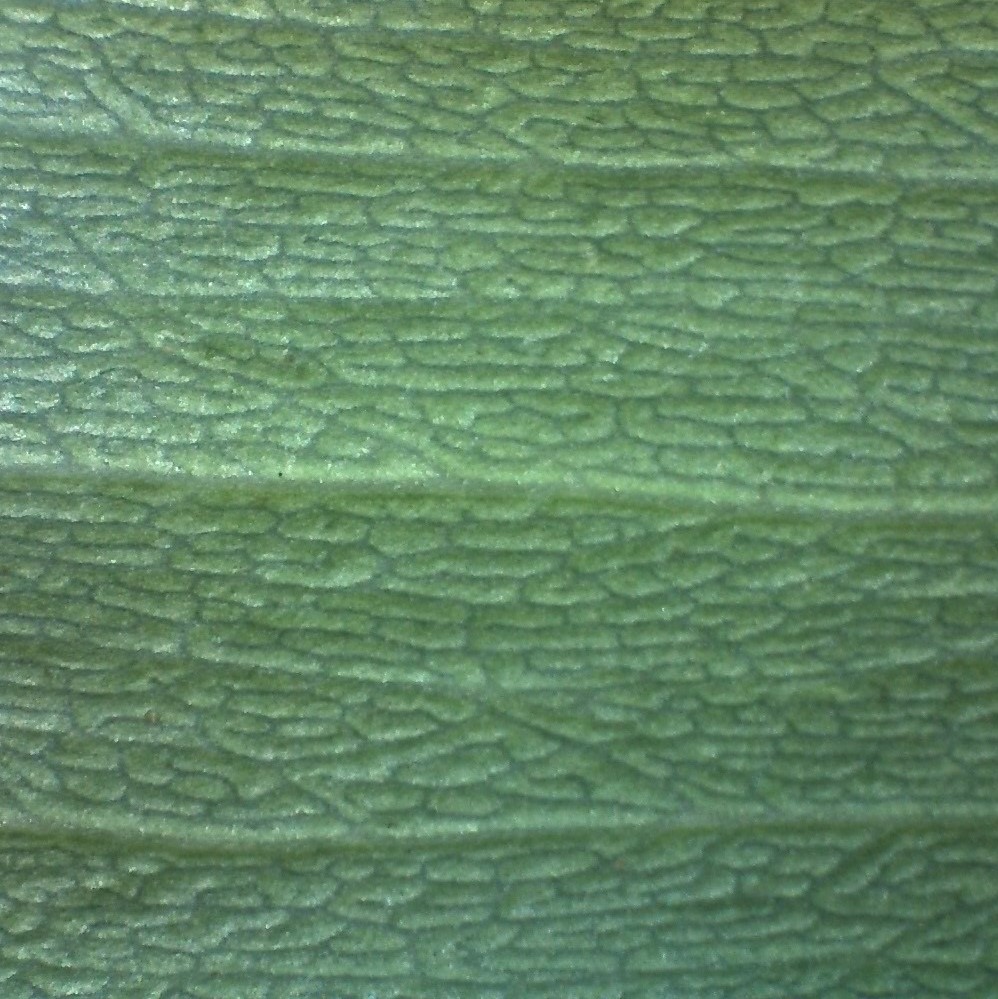
• Can grow to a very big tree (30 m). Bark is hard and cracked.
• The flowers are pale yellow balls in short bunches coming out between August and October.
• The leaves are up to 14cm long with 3 to 5 veins with a faint network between.
• The pods get coiled and twisted and stay on the tree a long time
What does the scientific name mean? Acacia says it’s a wattle from Greek “acis”, a thorn. Melanoxylon comes from the Latin for black “melano” and xylon from the Greek for wood.
LATE BLACK WATTLE (Acacia mearnsii)
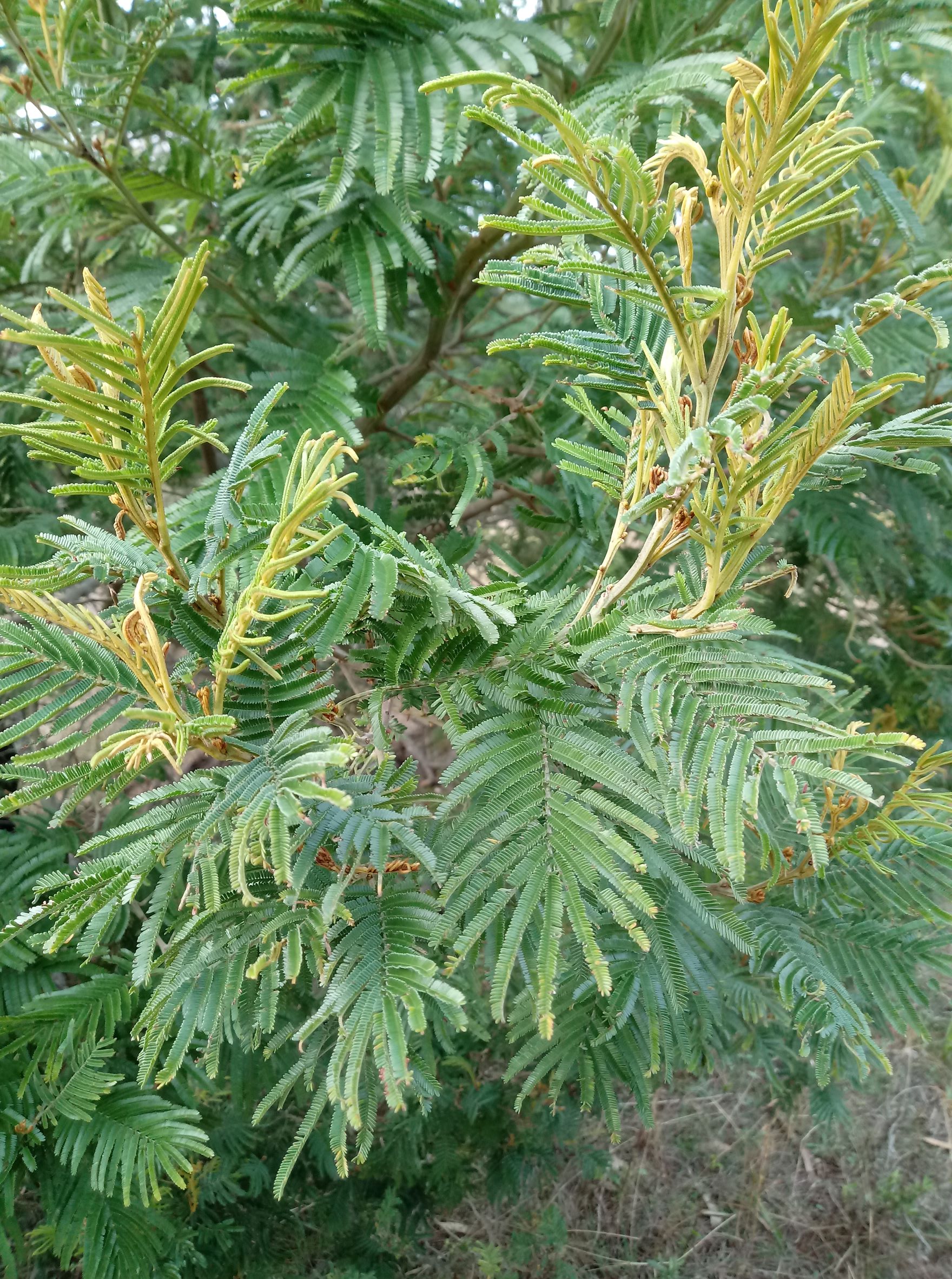
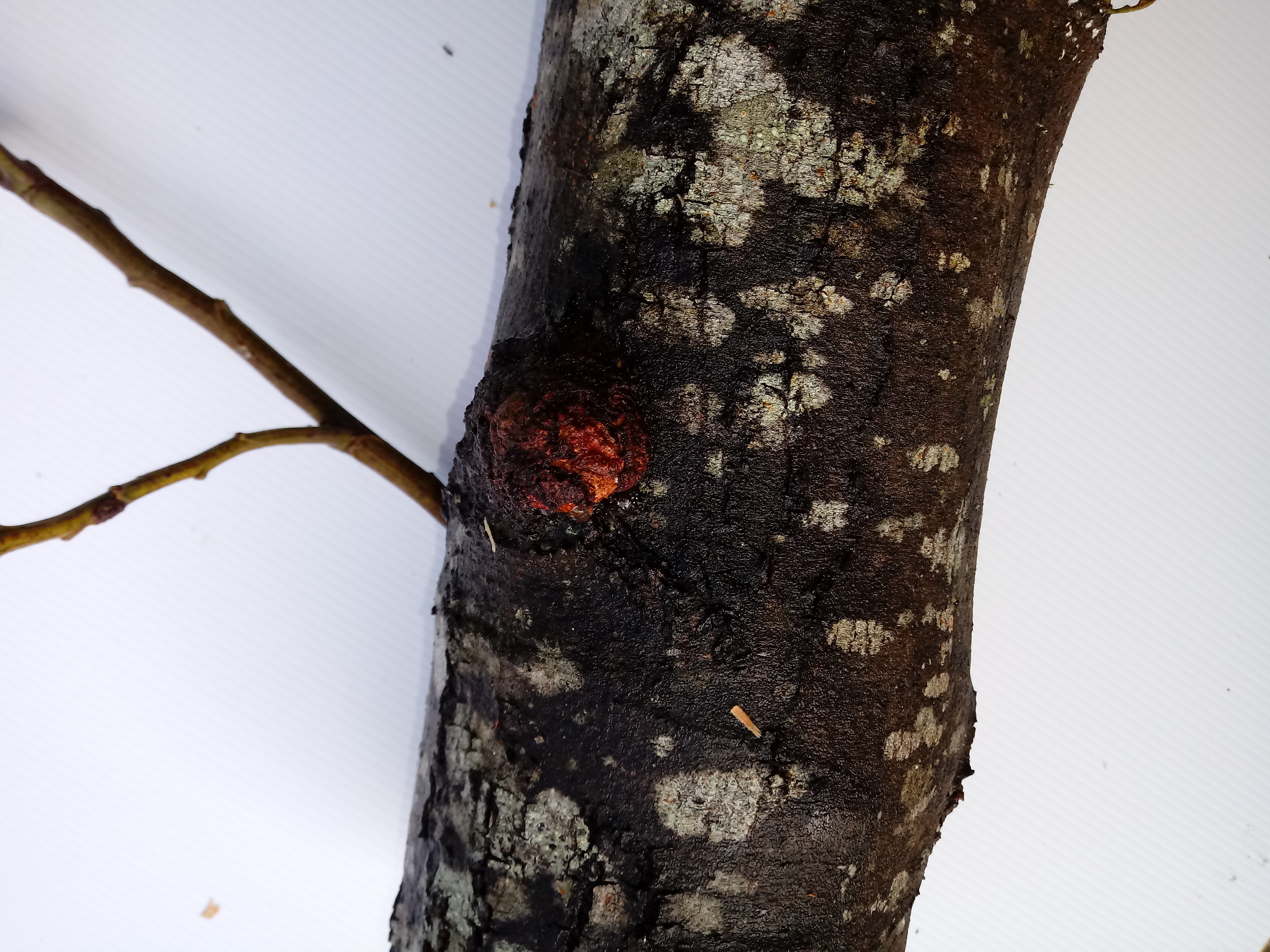
• Tree to 15 m.
• The last of our wattles to flower – October to December.
• Dark smooth bark often leaking gum.
• Ball shaped flowers irregularly spaced on short stems.
• Feathery leaves with paired leaflets.
Mearnsii because it was identified by the American naturalist Edgar Alexander Mearns
GOLDEN WATTLE (Acacia pycnantha)
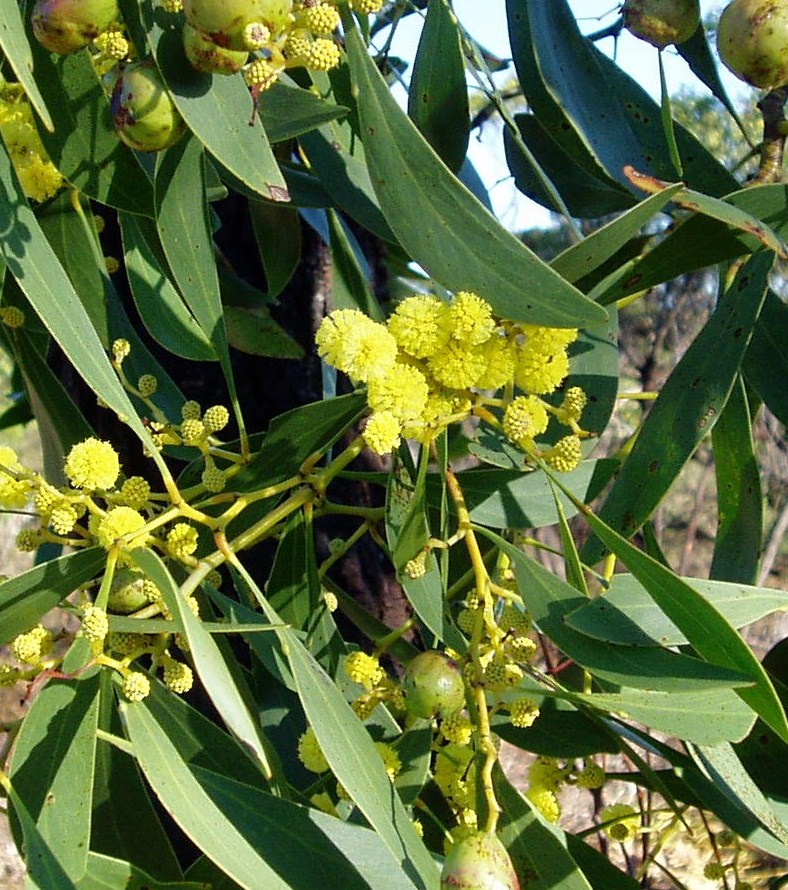
• Australia’s national floral emblem.
• Small smooth-skinned tree (8m) though it can be furrowed and rough in older plants.
• Can look a bit untidy.
• Leaves have a single central vein with side veins branching off.
• Golden flowers in large heads of many flowers between August and October.
• Flowers are ball-shaped and arranged on a stem up to 15 cm long
Pycnantha comes from the Greek “pypycnos”,
thick or crowded and “anthos”, a flower.
SPIKE WATTLE (Acacia oxycedrus)
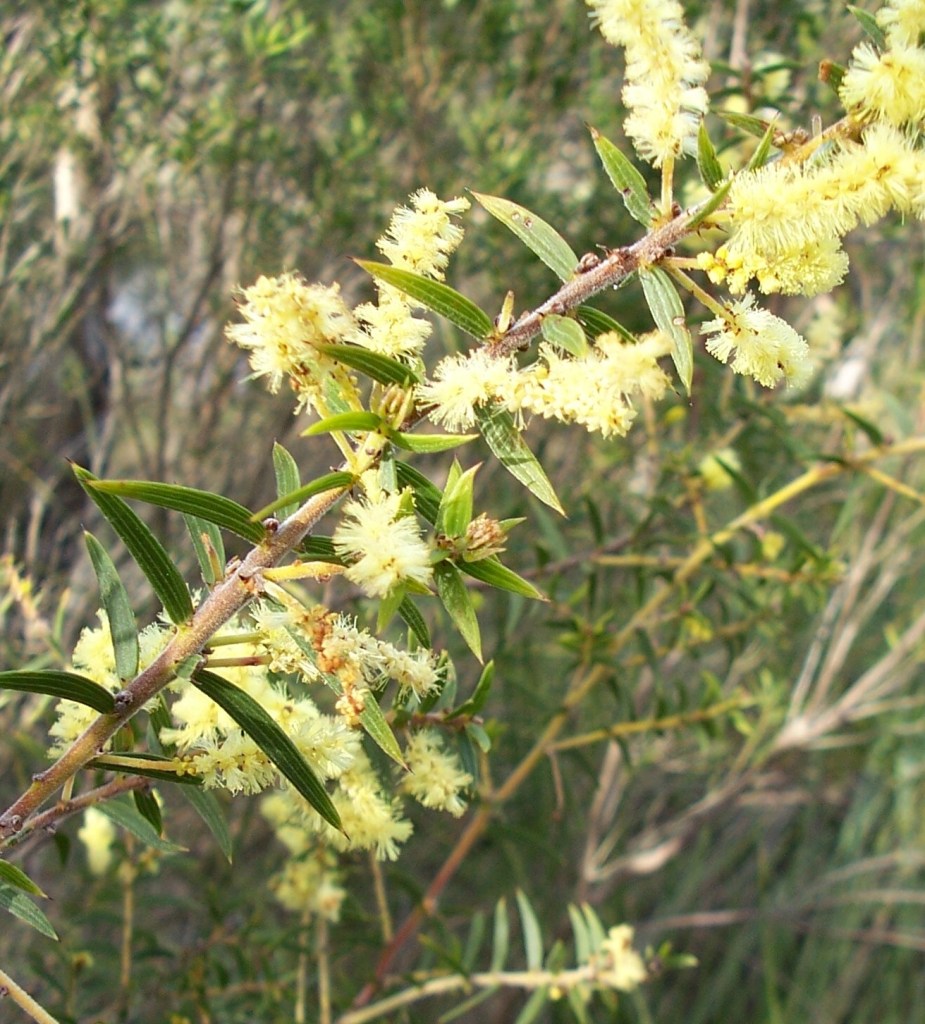
• Shrub or small tree to 9 m.
• Small stiff leaves ending in a sharp point
• Leaves are a bit curved and have 3 or 4 raised veins.
• Flowers are bright yellow round sticks up to 3 cm long.
• Between July and October
Oxycedrus comes from the Greek “oxys”, prickly, sharp, and “kédron” a tree
COAST WATTLE (Acacia longifolia spp.sophorae)
Coast Wattle has become a problem in South West Victoria since the 1960s. It can produce plants that take over large areas and particularly disturbed ground. It poisons the soil around it so nothing else can grow.
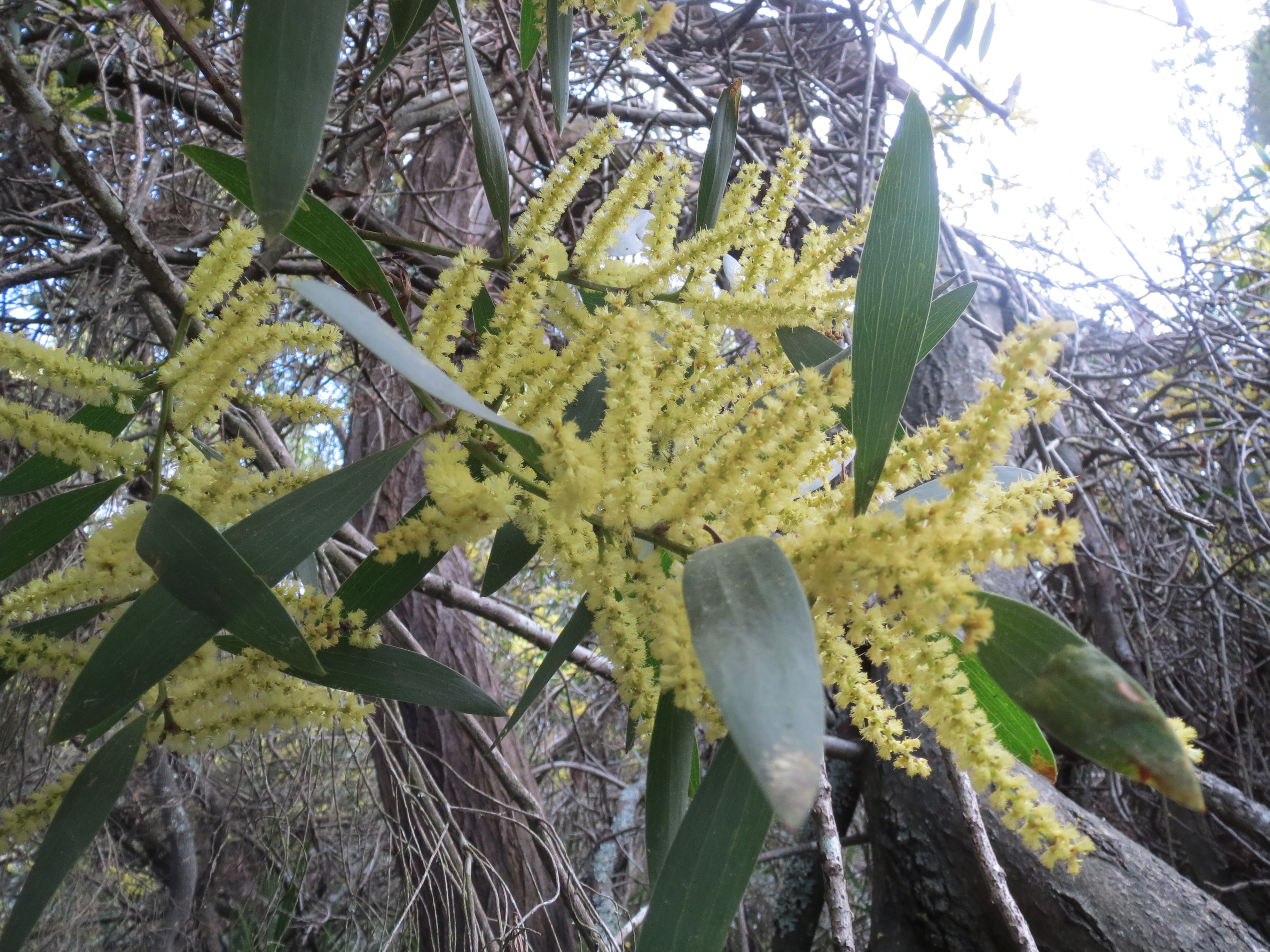

• Mostly dense bushy shrubs. Smooth skinned trunks and branches.
• Leaves are up to 20 cm long.
• They usually point upward and have up to 4 main veins.
• It flowers between July and October.
• The flowers are yellow spikes up to 4 cm long.
• The seed pods become coiled and twisted when they’ve dried out
Longifolia comes from the Latin “longus”, long, and “folium” for leaf. Sopharae may refer to a similarity to some species in the Sophora plant family.
PRICKLY MOSES (Acacia verticillata)
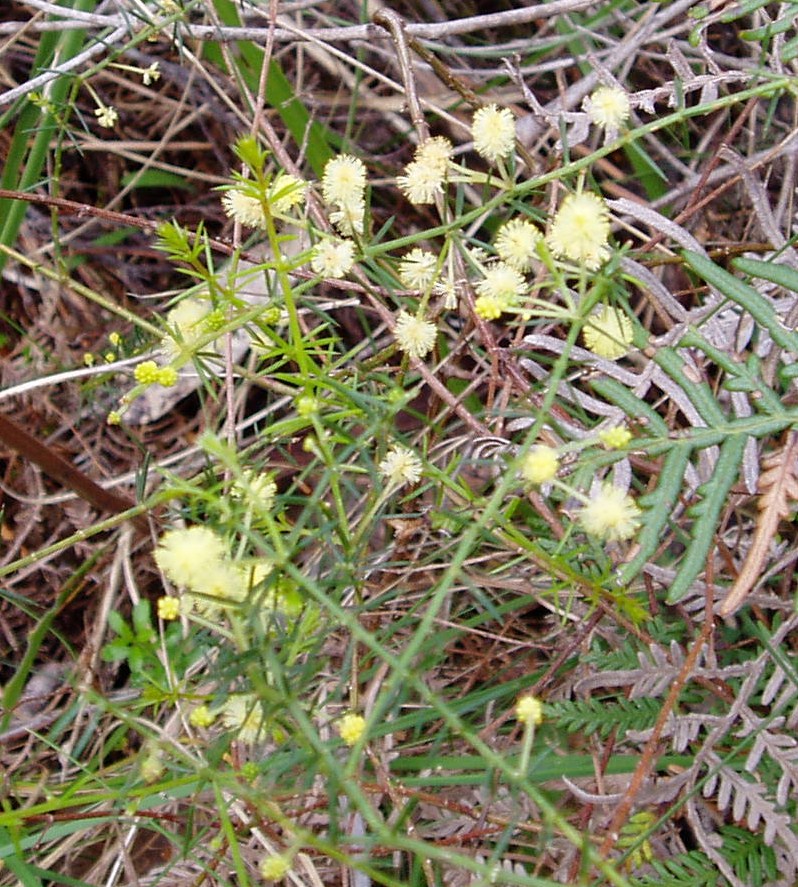
• This one can be very hard to spot unless it’s in flower (between July and November).
• A prickly low shrub.
• The small needle-like leaves come in groups of about 6 arranged around a central stem
• Flowers are slightly elongated bobbles.
Verticillata comes from the Latin for whorled which describes the grouping of the leaves around a central stem. Prickly Moses originated from “prickly mimosa”. Mimosaceae is the plant Family the wattles belong to.
OTHER WATTLES AROUND NELSON
If this has sparked your interest, you can try and hunt down some of our other Wattles: Mitchell’s Wattle (Acacia mitchellii), Myrtle Wattle (Acacia myrtifolia), Hedge Wattle (Acacia paradoxa), Wirilda (Acacia retinodes) and Hop Wattle (Acacia stricta). You’ll also find some non-native wattles that have escaped from people’s gardens.
Source: L Costerman. Native Plants and Shrubs of South Eastern Australia 1998 Lansdowne Publishing
Words and photos by M Styles
 Nelson Coastcare