

What’s in flower? Slim pickings this month. A few yellow daisy species eg. Groundsels, some tea-tree and guinea flowers are still around, but not much else. The reason – adaptation.
Plants that avoid flowering and producing seed during Australia’s hot, dry summer stand a better chance of surviving and having offspring. Plants that concentrate on survival rather than reproduction win. Seeds need water to germinate and thrive. Producing them now would be a waste.
The featured flower is Sweet Bursaria (Bursaria spinosa). The common name tells us it is sweet smelling. The scientific name tell us it is spiny.
It is worth observing that the Bursaria seed stays in the pods for a long time and are still ready to be released and germinated into the Autumn and early Winter.
Bursaria spinosa is one of a very few species that produce a compound called Aesculin. Aesculin is used in microbiology laboratories to aid in the identification of bacterial species. A few of us have wondered if that is why Bursaria spine wounds can be slow to heal.
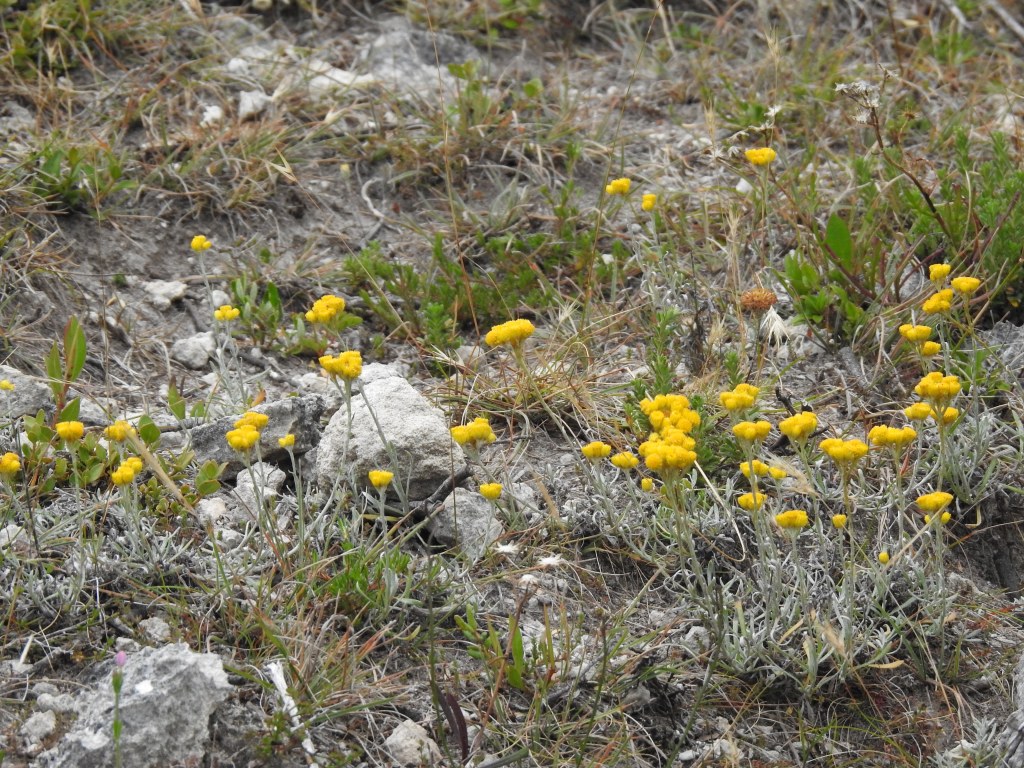
Common Everlasting (Chrysocephalum apiculatum)? – usually flowers earlier than this, but maybe our strange weather has encouraged a late flowering.
Knobby Club-rush (Ficinia nodosa)
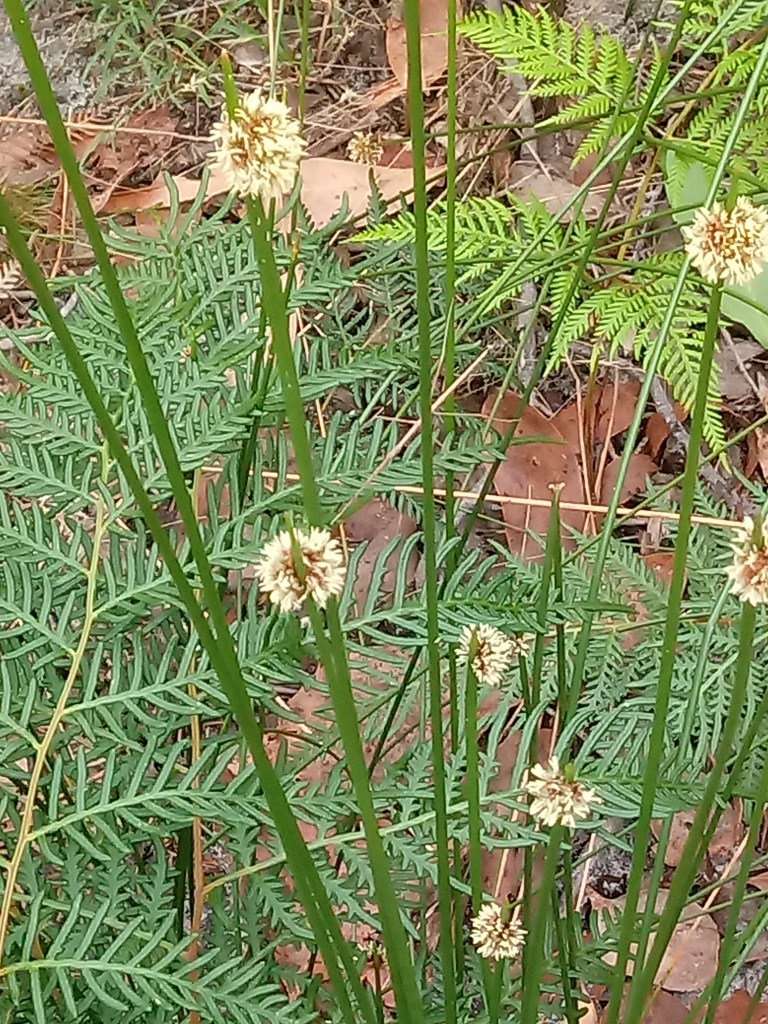
Photos C Young & M Styles
Reference Aesculin – Wikipedia
 Nelson Coastcare