
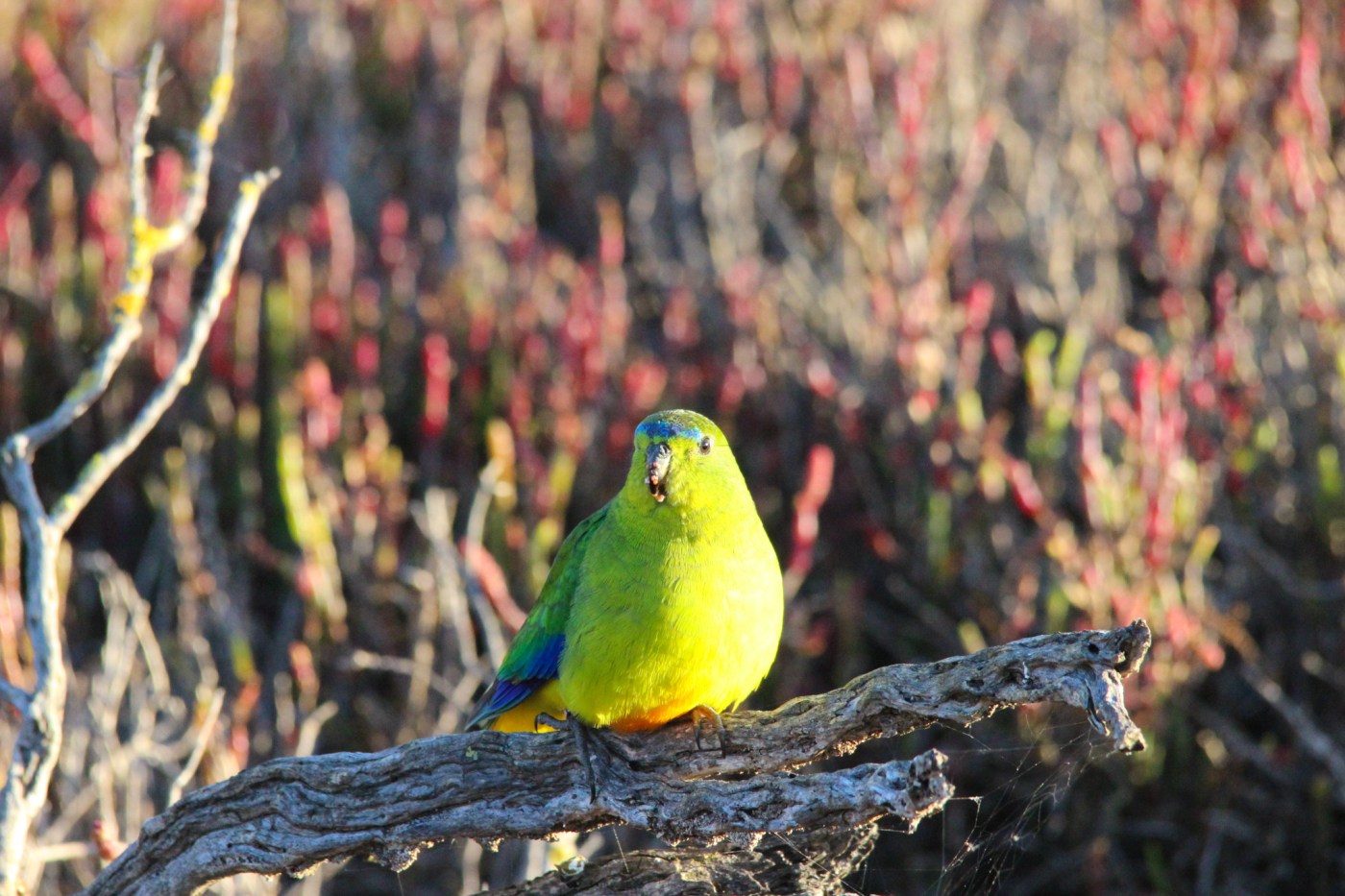
Here is a contribution from Dr Johannes Martens. Hanne works with the Wildlife Conservation & Science section of Zoos Victoria.
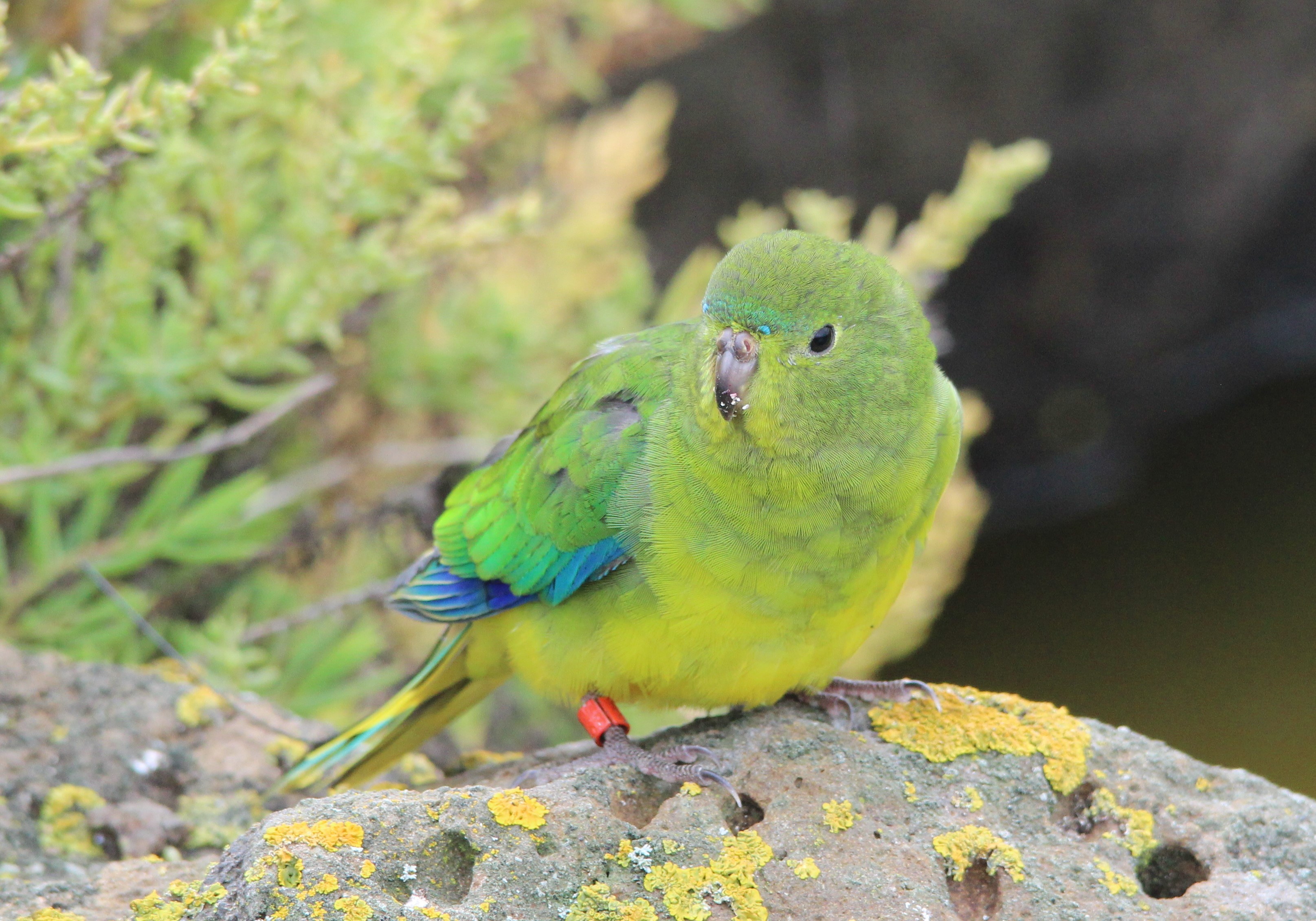
“The Orange-bellied Parrot (OBP) is not only brilliantly coloured and one of only two truly migratory parrot species in the world, but is also critically endangered, with fewer than 200 of these beautiful birds having left their only remaining breeding site after the breeding season last autumn. A few years ago, only 17 individuals remained in the wild. OBPs breed in south-western Tasmania and spend the winter months along the south-eastern coast of the Australian mainland. Their abundance and range have been in decline for at least the last century.
To help support the recovery of the OBPs, one goal is to improve the return rates of birds to their breeding site after overwintering. A major obstacle to improving return rates is the paucity of information about where birds go on the Australian mainland, how they use their migratory pathway(s) to get there, and when and where most mortality occurs outside the breeding season.
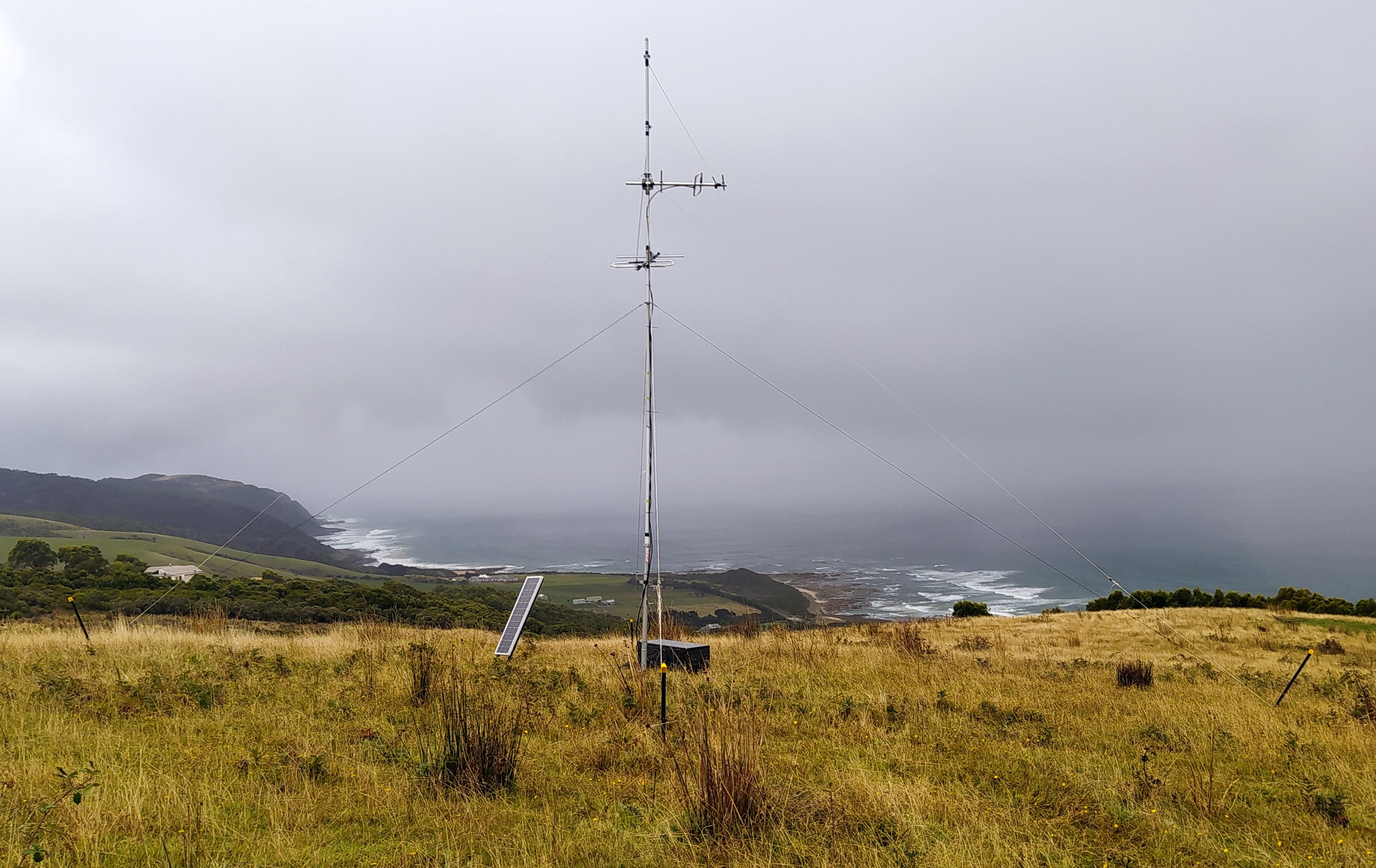
To improve our knowledge on this, researchers from Zoos Victoria and the Department of Natural Resources and Environment Tasmania are tracking OBPs on their migration. Fixed receiver stations are placed along the western Tasmanian and the Victorian coast, to investigate OBP migratory movements along the coastline during the non-breeding season. OBPs that were bred in captivity are released at the breeding site in late summer. Before release, tiny transmitters are attached to their tail feathers, which can then be detected by the fixed receiver stations when the birds fly past within range. This project will provide valuable insights into use of the migration pathway, potential stopover sites and mortality.“
So, what has that got to do with Nelson and Nelson Coastcare?
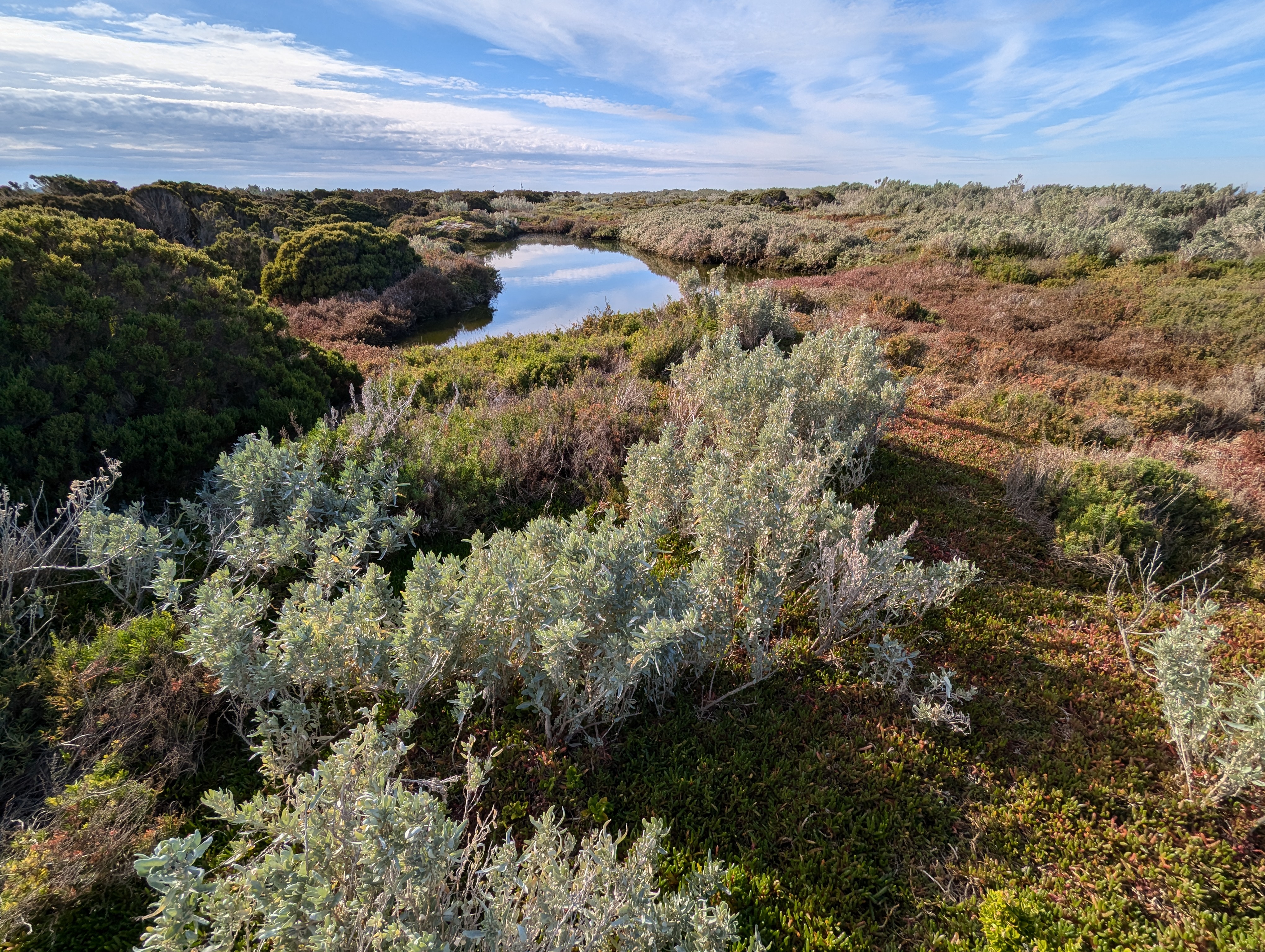
Firstly, one of our members has been hosting a receiver on land down near the estuary. Hanne has supplied a picture of a receiver and of the OBP’s typical habitat – that looks familiar!
Second, some of us helped with extracting seed from Beaded-Glasswort to supplement the diets of OBPs being raised in captivity. The picture below shows how small the seeds and pods are. A very relaxing activity during the Covid lockdowns. The main picture of an OBP has Glasswort in the background.
Third, an ecological survey team working for Neoen (proponent of the Kentbruck windfarm) were excited to spot an OBP in the dunes near Swan Lake in 2020. The upcoming Environmental Effects Statement for the windfarm will, we think, need to show that OBPs will not be adversely impacted by the project.
Lastly, keep an eye out and, if possible, get a photo. Any observations can be reported to the National Orange-bellied Parrot Recovery Team (https://www.obprecoveryteam.org/) or Birdlife Australia. You can listen to the OBP’s distinctive call at (https://xeno-canto.org/explore?query=orange-bellied%20parrot). The more that is understand about this species, the better its chances of recovery.

Photos by J Martens, S Agterhuis & M Styles. Words by J Martens & M Styles
 Nelson Coastcare
Leave a comment