
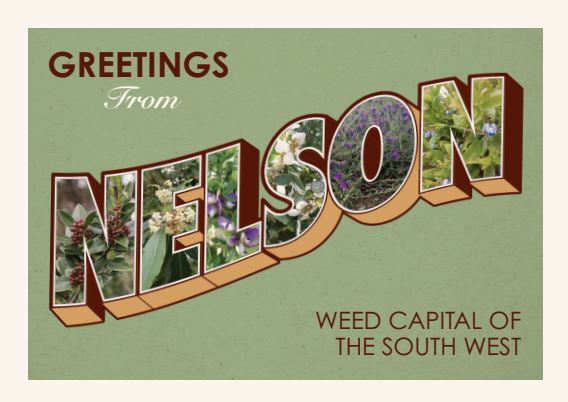
Thank you for taking the time to visit this post about Nelson’s weeds. The Postcard was a cheeky way of trying to get the attention of the community and government agencies.
Back in 2017, Nelson Coastcare took on the job of identifying and mapping weeds in and around Nelson. The situation was far worse than we had anticipated in terms of both species and spread. Things have only become worse since then. Our list of non-native species that have gone wild has grown to 98.
There is plenty of information on weeds on the web – so much it becomes overwhelming. The weeds highlighted in this post are, we think, current or potential threats to Nelson and its National Parks. We will try and point you to spots where you can see them for yourself.
Italian Buckthorn (Rhamnus alaternus) Status: Environmental weed.
Dense shrub to 3m plus high. Dark glossy green leaves 2-8cm long with serrated edges (a similar native, Sea Box, has smooth leaf edges). Smooth bark. Small yellow green flowers late Autumn to Spring produce small red berries in summer that ripen to black. No thorns. Older stems have smooth grey/brown bark.
Where to see some? Everywhere, but dense along North Nelson Rd and around the CFA.
Treatment? Small seedlings can be hand pulled. The root has a twist which can make this tricky. Any root material left behind will resprout. Larger plants should be cut and swabbed with herbicide – we use 100% glyphosate. Be sure to cut the plant off as close to the ground as you can (below any shoots). We have also successfully used Basal Bark Banding. This method is shown in a video/podcast at the Glenelg Hopkins CMA website (https://www.ghcma.vic.gov.au/our-region/biodiversity/controlling-italian-buckthorn/).
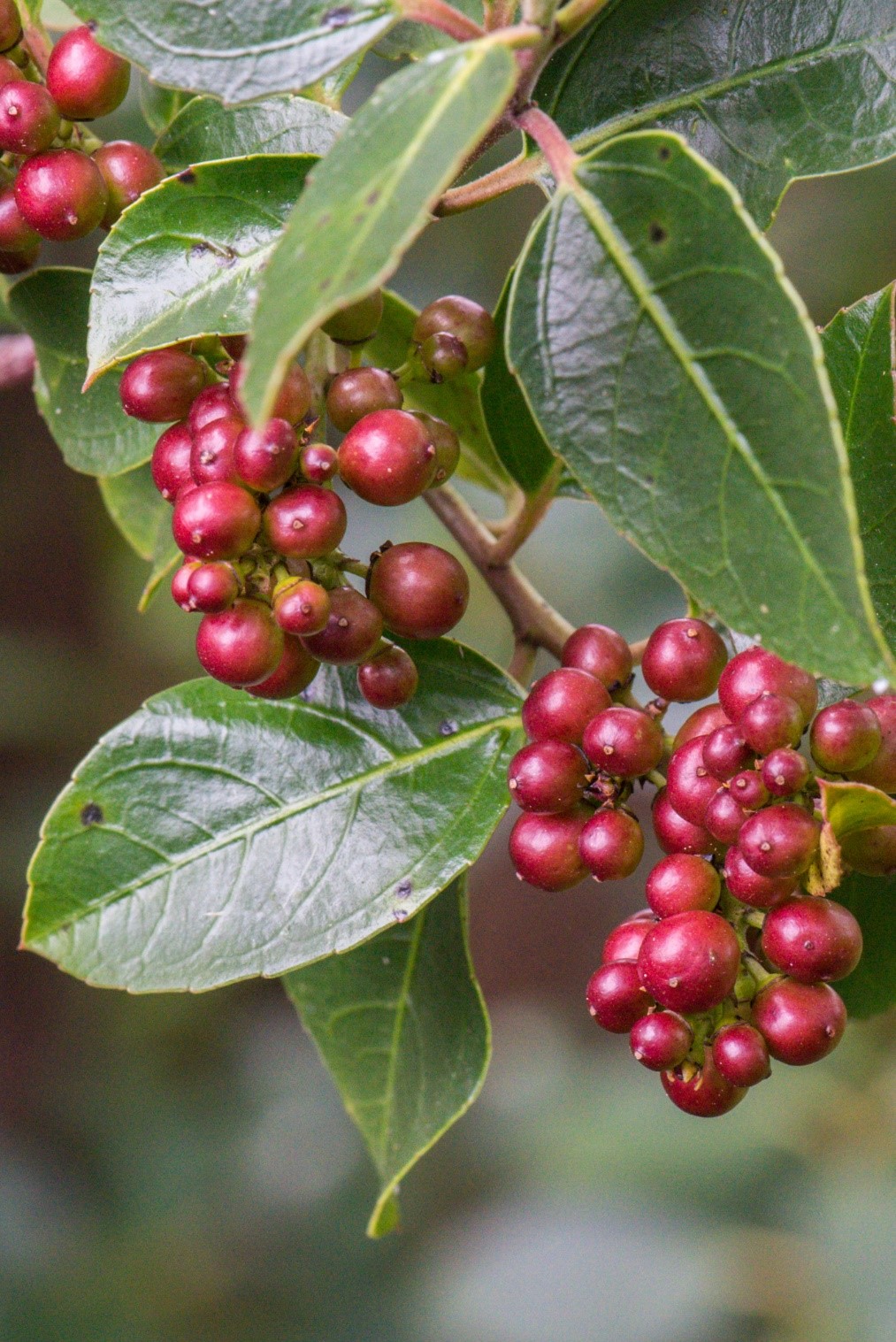
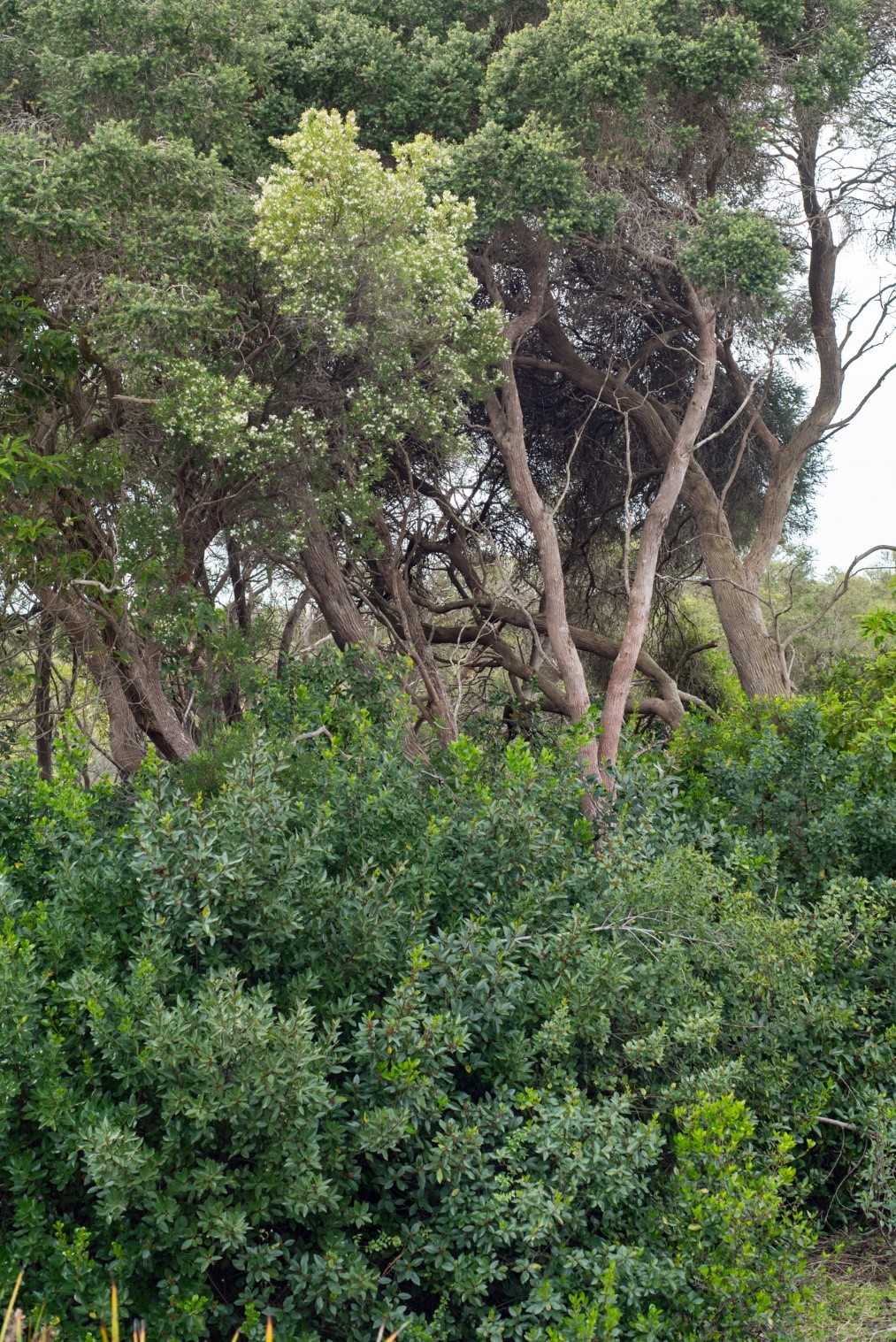
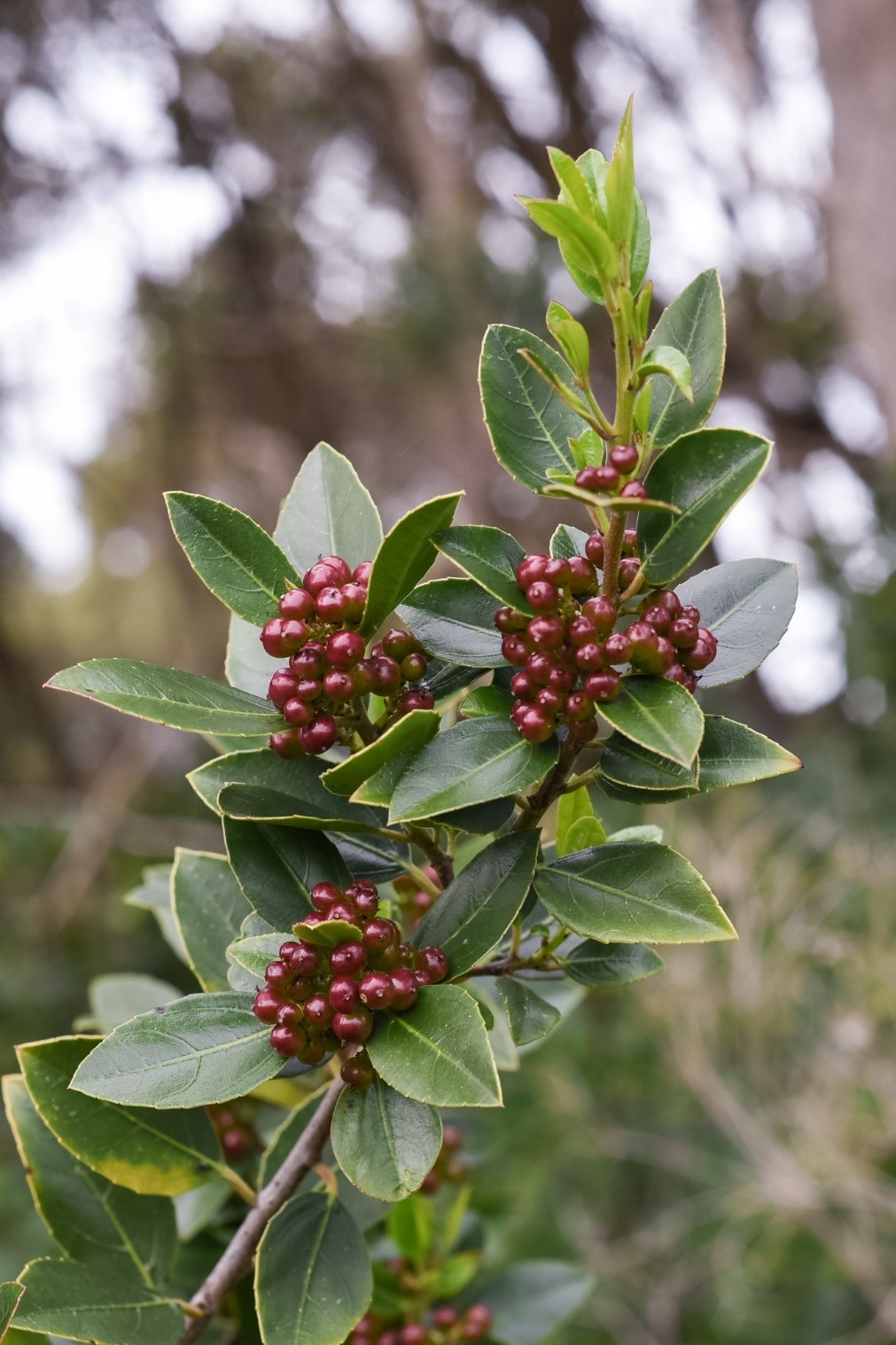
Photos by J Tuck
Sweet Pittosporum (Pittosporum undulatum) Status: Environmental weed
Large evergreen shrub/tree which can grow to 14M tall in its natural range which, in Victoria, is east of Bairnsdale! Bell-shaped, white, fragrant flowers in late winter/early spring. Glossy long green leaves with a wavey edge that are smelly when crushed. Orange/brown berries about 1cm across with sticky seeds inside.
Where to see some? Some big trees and their offspring along Simsons Landing Rd on the south side near the Car Park.
Treatment? As for Italian Buckthorn. Small seedlings can be hand pulled. Larger plants should be cut and swabbed or drilled and filled with herbicide. Seeds will persist in the ground so keep an eye out for new seedlings.
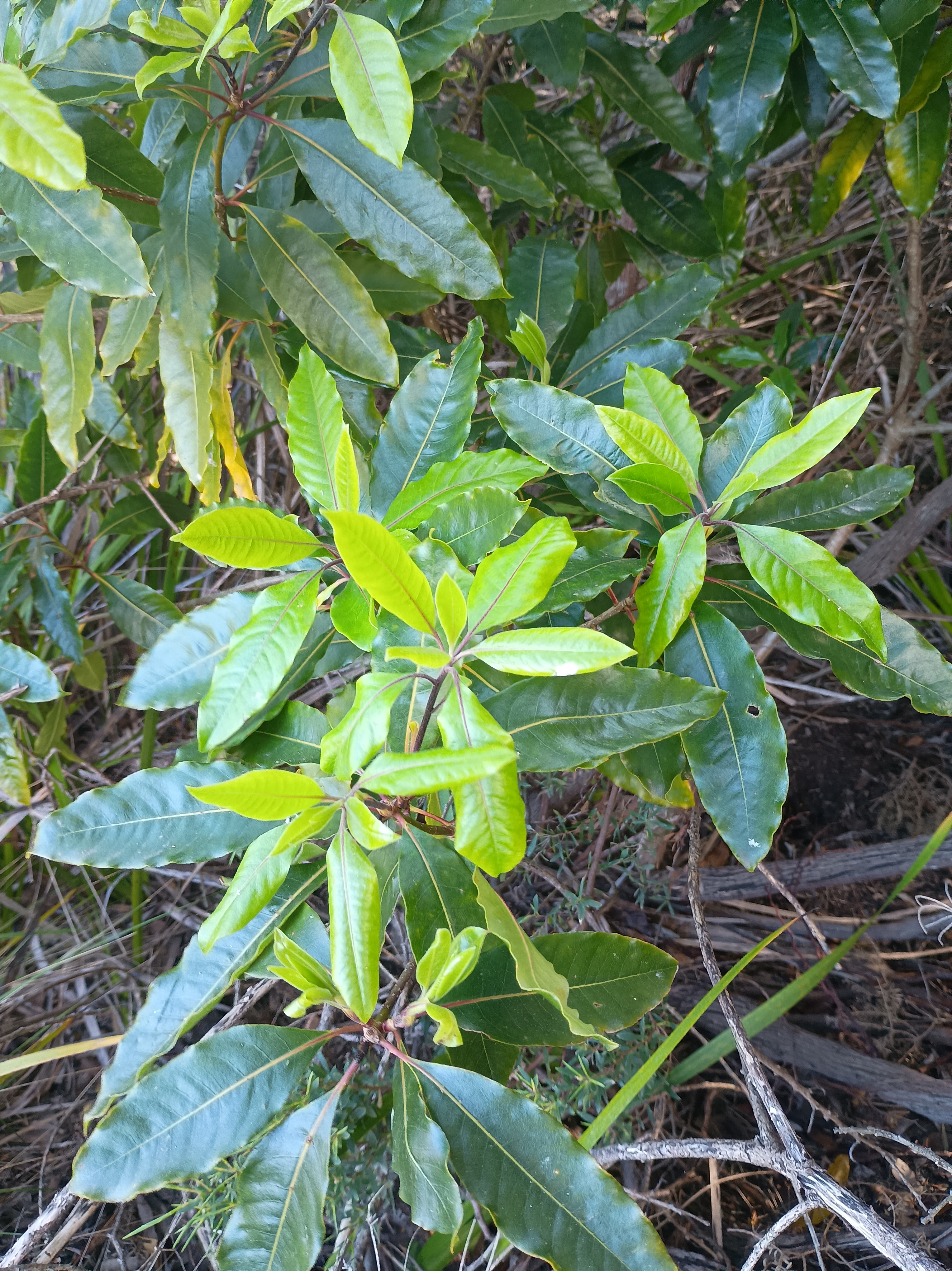


Photos by M Styles, John Tann from Sydney, Australia, Sweet pittosporum (3152674032), CC BY 2.0 and Krzysztof Ziarnek, Kenraiz, Pittosporum undulatum kz01, CC BY-SA 4.0
Myrtle-leaf milkwort (Polygala myrtifolia) Status: Environmental weed
Pretty pink/purple pea-like flowers 2 to 3cm long with two large petal-like wings and three petals. Mostly in spring and summer but can flower all year. An evergreen shrub up to 2 metres high. Leaves oblong to oval arranged alternately along the stems.
Where to see some? The Nelson State Forest along Wade Street on the west side. Beach Rd near town has a recurring infestation despite past control work. The river cliffs near Donovans are full of it. There is a swag of them along the highway just after the bridge heading toward the Mount – left hand side.
Treatment? Manual removal of seedlings and larger plants. Cut and swab or folar spray.
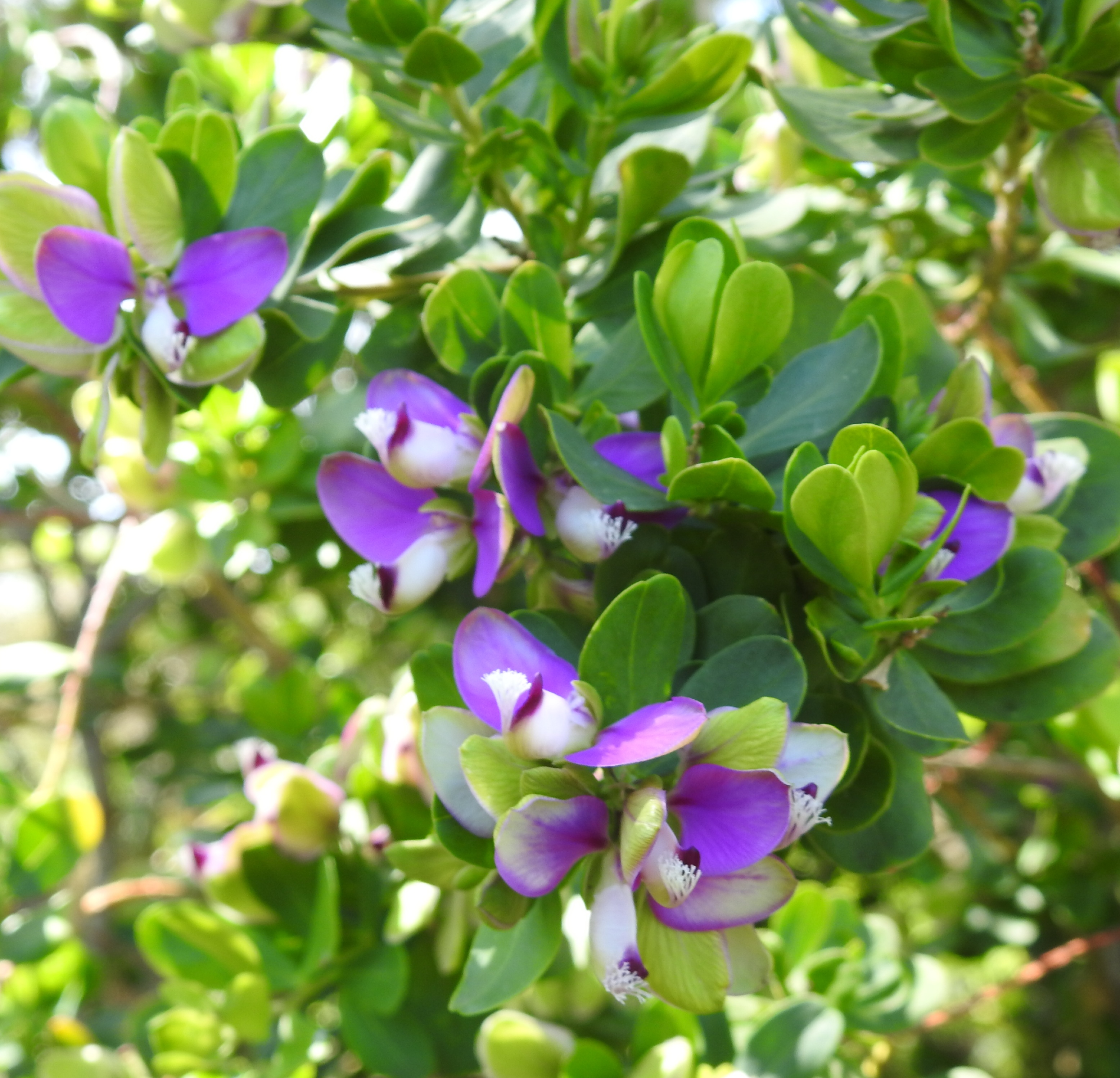
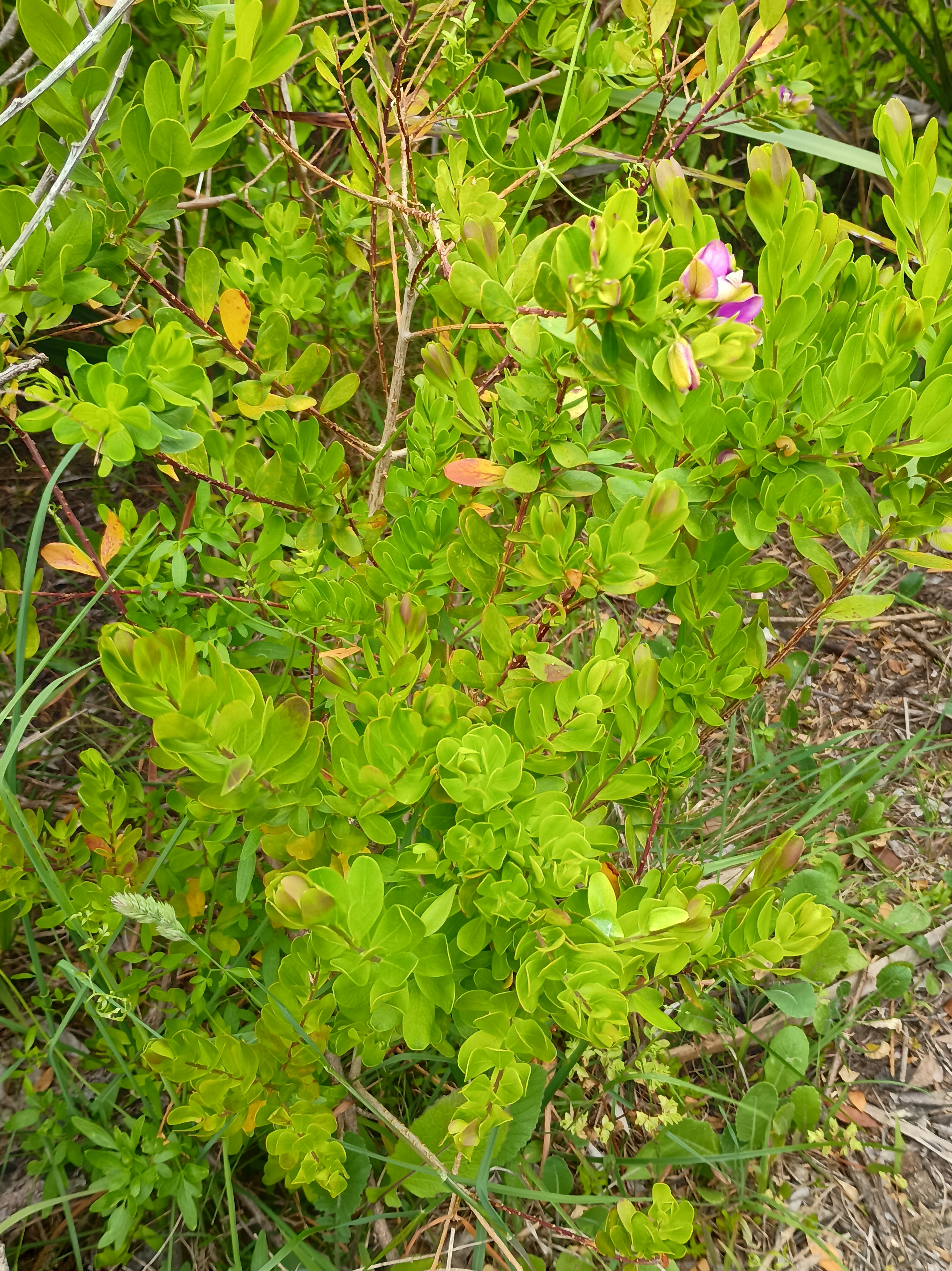
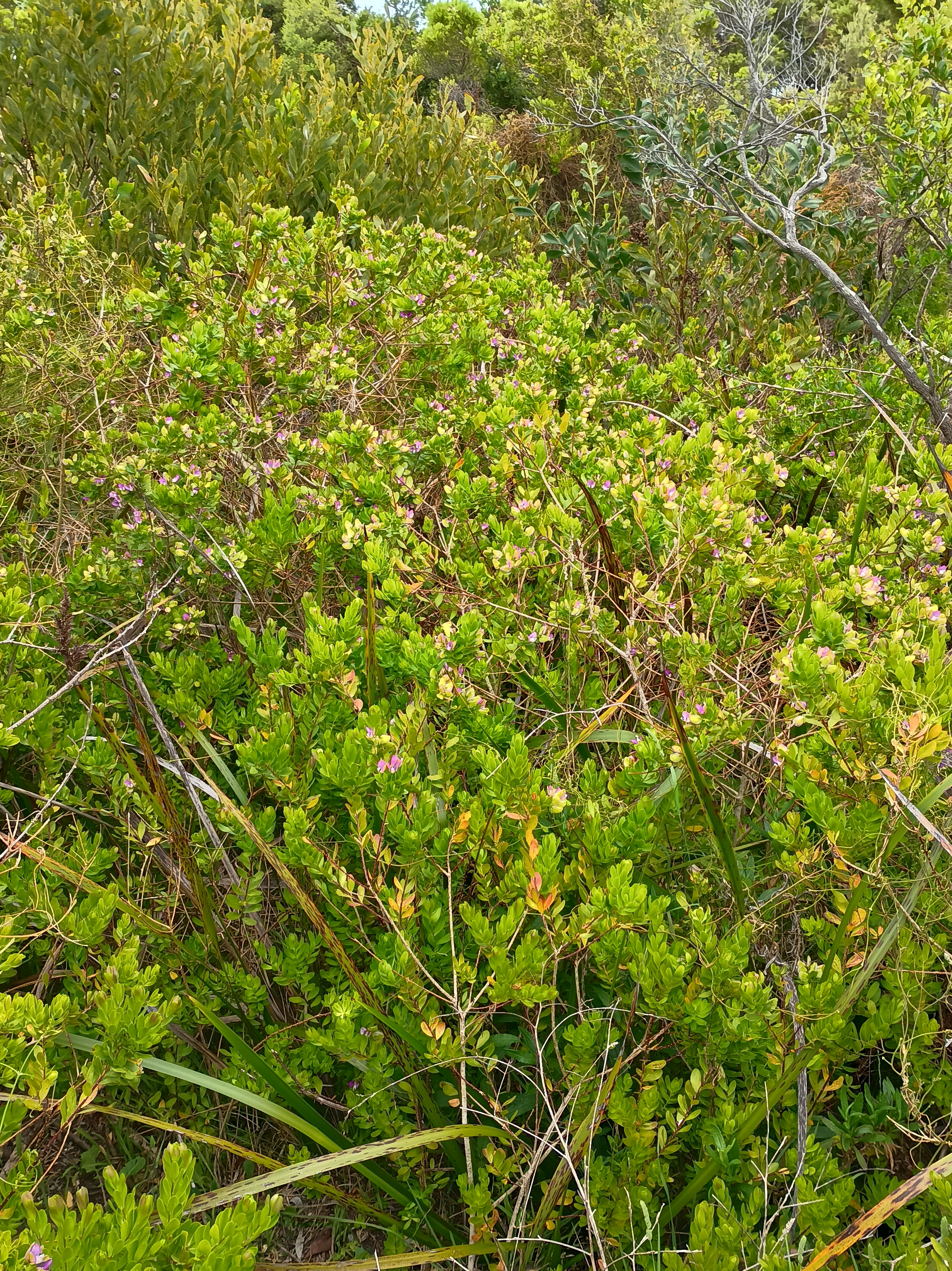
Photos by C Young & M Styles
Coastal Tea-tree (Leptospermum laevigatum) Status: Environmental weed
Small tree or shrub with papery bark. Grey-green leaves to 3cm long, oblong to narrowly oval with a small point at the tip. White flowers with 5 petals in late winter/early summer. Wheel-shaped seed capsules.
Where to see some? This plant has been commonly used as a garden ornamental. There are some big ones next to the old Softwoods Shed near the CFA. If you have any doubts as to its potential invasiveness, check out the State Forest around the back of Kywong.
Treatment? Manual removal of seedlings and larger plants. Cut and swab.
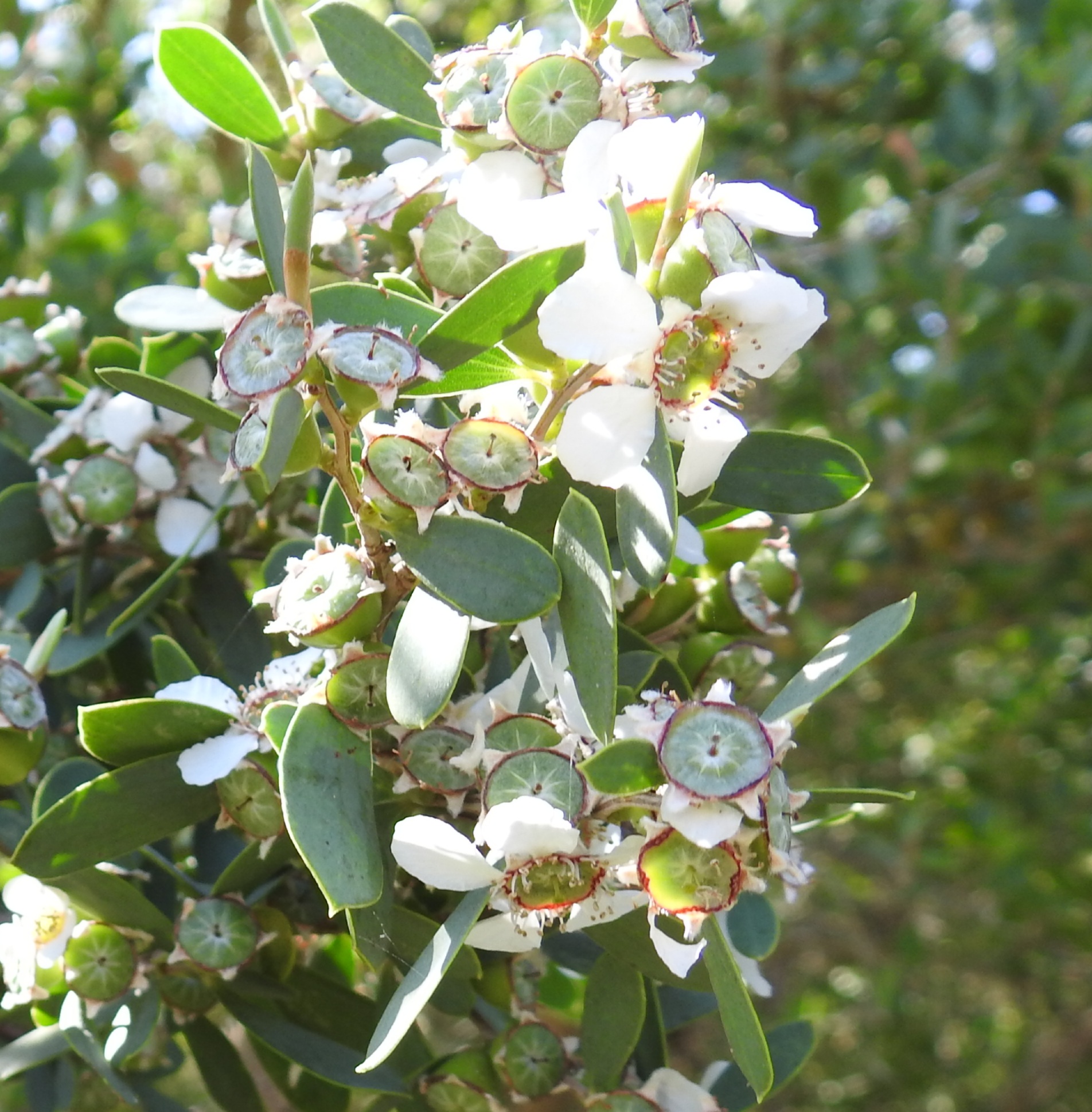
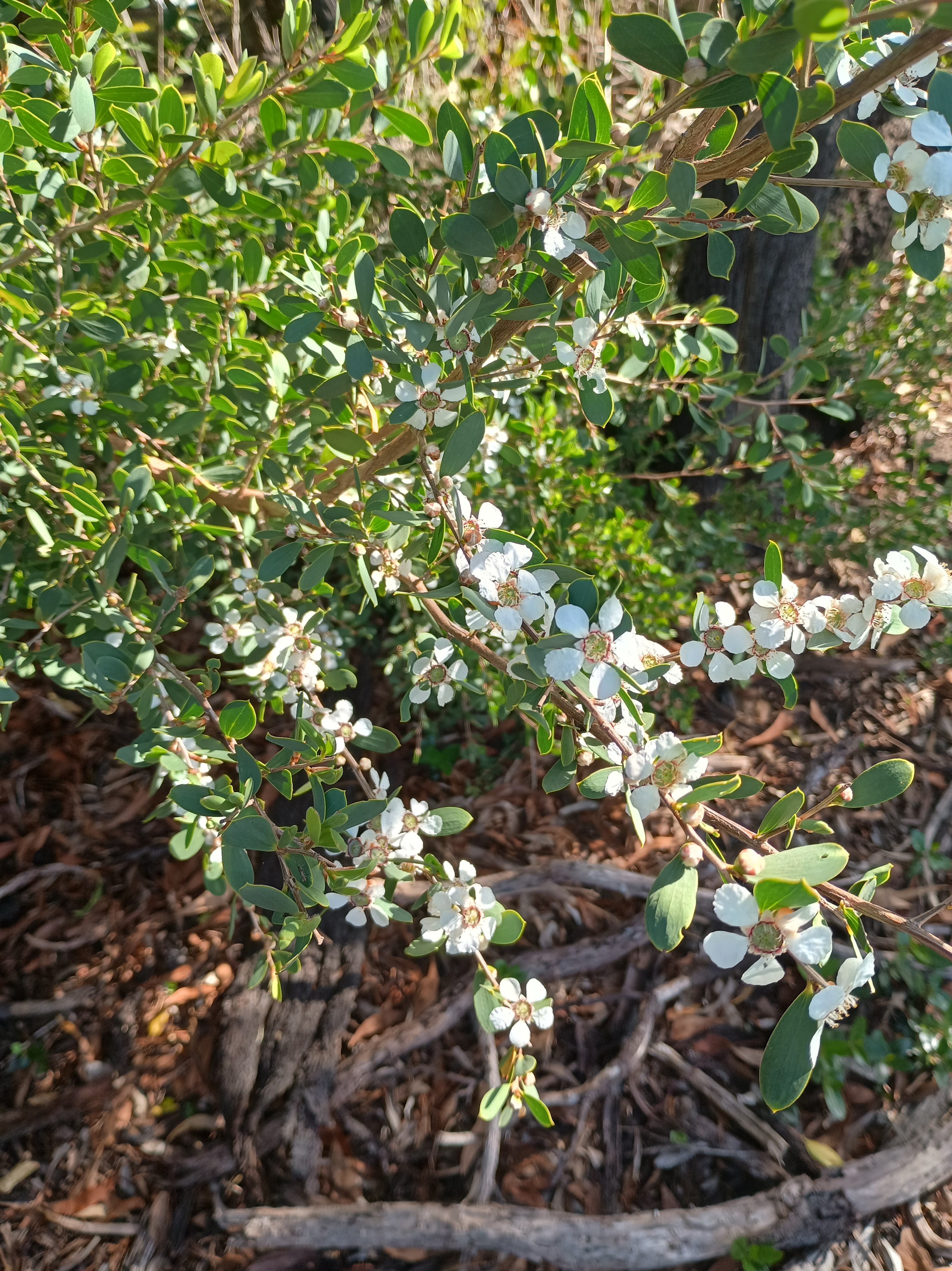
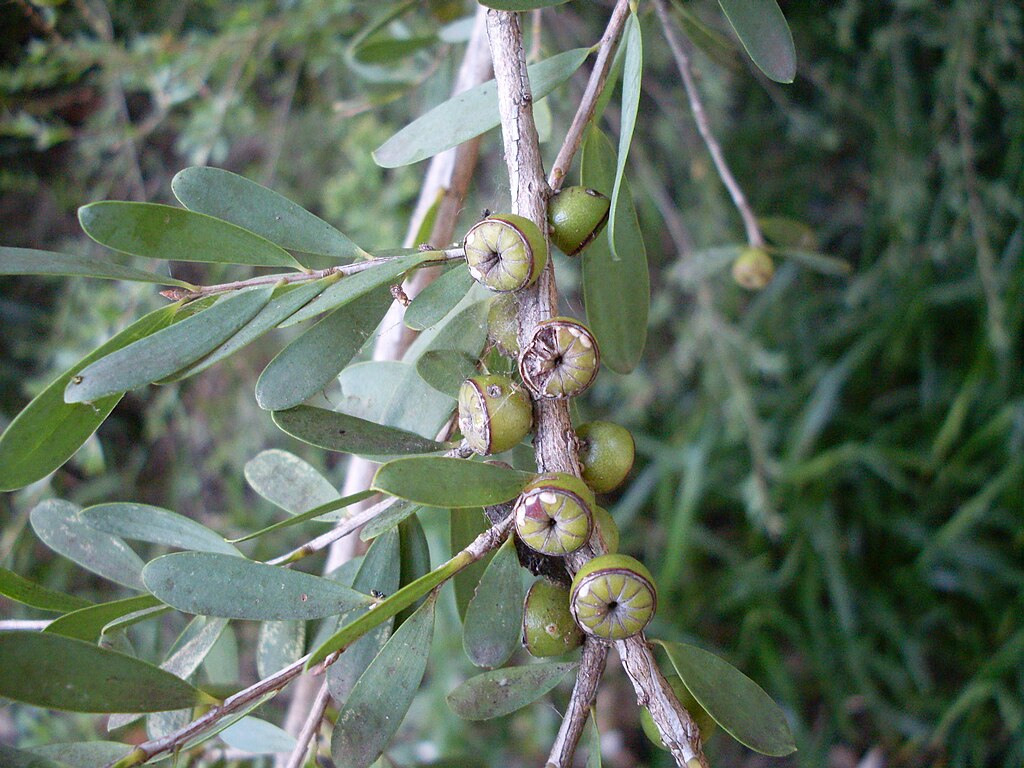
Photos by C Young, M Styles and John Tann from Sydney, Australia, Coastal Tea-tree (3364727549), CC BY 2.0
Paterson’s Curse (Echium plantagineum) Status:Regionally Controlled Noxious Weed*
Erect many-branched, hairy annual herb to 1.2m high. It grows as a rosette in autumn and winter and produces flowering stalks in spring and early summer. Paterson’s Curse leaves are green to light-green, alternate, thick and densely covered with soft or bristly hairs. Basal (rosette) leaves are up to 30cm long, are shortly stalked, elliptical-to-oval or paddle-shaped and veined. These leaves die off as stem growth increases. Stem leaves are smaller, strongly haired, stalkless, oblong-to-lance-shaped and heart-shaped at the base. The flowers of Paterson’s curse are in curved terminal clusters and are funnel-shaped. They are usually purple/blue.
Where to see some? This weed used to be rare in the Nelson area. It is now common along tracks in the Park and in the pine breaks. The photo below is at the Park boundary at the top of Lucas Rd. The infestation is moving up a track into the Park.
Treatment? Looking at the South Australian Weed Control Handbook Weed control handbook for declared plants in South Australia most herbicide treatments of wide area infestations need to be done by qualified operators. Spot spraying with Glyphosate is possible when plants are actively growing and before seed set. Avoid spreading this weed by not walking or driving through them. Machinery such as graders should be cleaned down regularly. Hand pull small plants.
*Regionally Controlled weeds are generally widespread in a region. While eradication may not be possible, they should be continually controlled at an acceptable level. Landowners must control and prevent the spread of them on their property and adjoining roadsides.
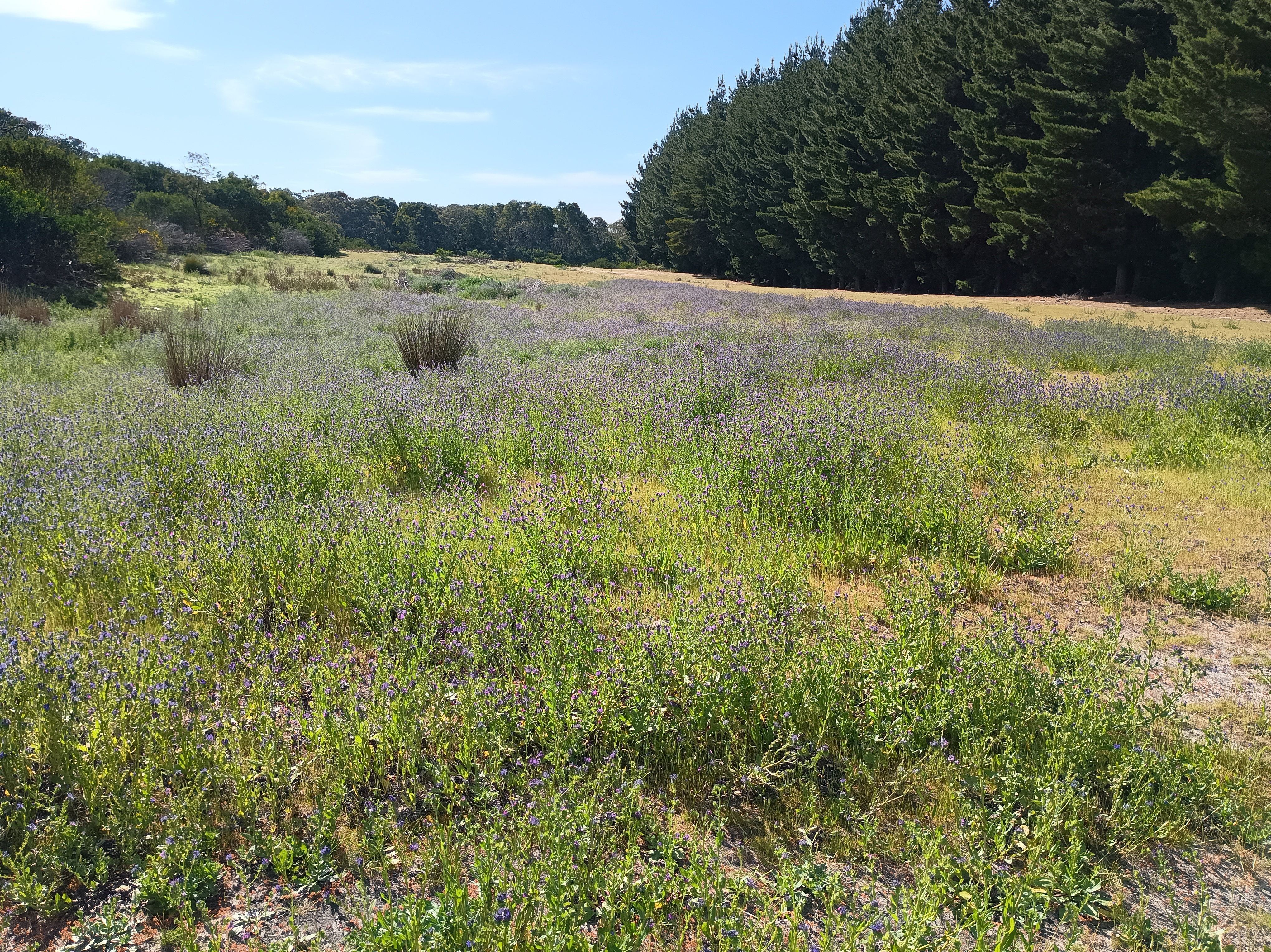
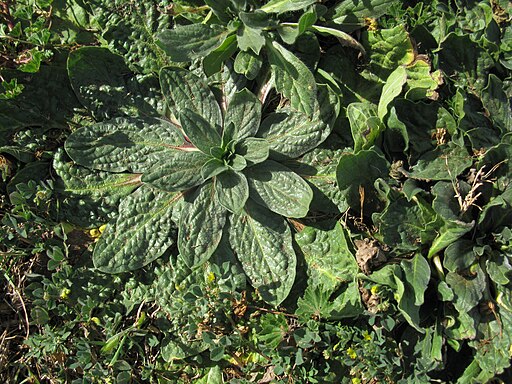

Photos by M Styles, Harry Rose from South West Rocks, Australia, Echium plantagineum rosette2 (13919320511), CC BY 2.0 and Krzysztof Ziarnek, Kenraiz, Echium plantagineum kz8, CC BY-SA 4.0
Onion Weed/Asphodel (Asphodelus fistulosus) Status: Environmental weed
A very common weed that has only really taken off in Nelson in the last few years. It loves roadsides and disturbed ground. An erect, tufted, non-woody plant with stems growing usually to less than 40 cm in height. Its onion-like leaves are smooth, hollow, cylindrical, and elongated in shape. White/pink flowers (1-2 cm) on the upper parts of the stems have six petals with a red stripe down its centre. Round seed capsules that tend to be spread by wind, machinery, vehicles, and muddy boots. Infestations can grow so thickly that other vegetation cover is excluded. Livestock refuse to eat onion weed.
Where to see some? Nature strips and roadsides all over Nelson. A thick patch across the road from the CFA.
Treatment? Very hard to eradicate once established. If you can stop them before they seed your job is done! Avoid spreading this weed by not walking or driving through them. Do not mow them once seed has formed, it just spreads the weed further. Glyphoshate works on small seedling but bigger plants need to be cut out and bagged. Machinery such as graders should be cleaned down regularly.
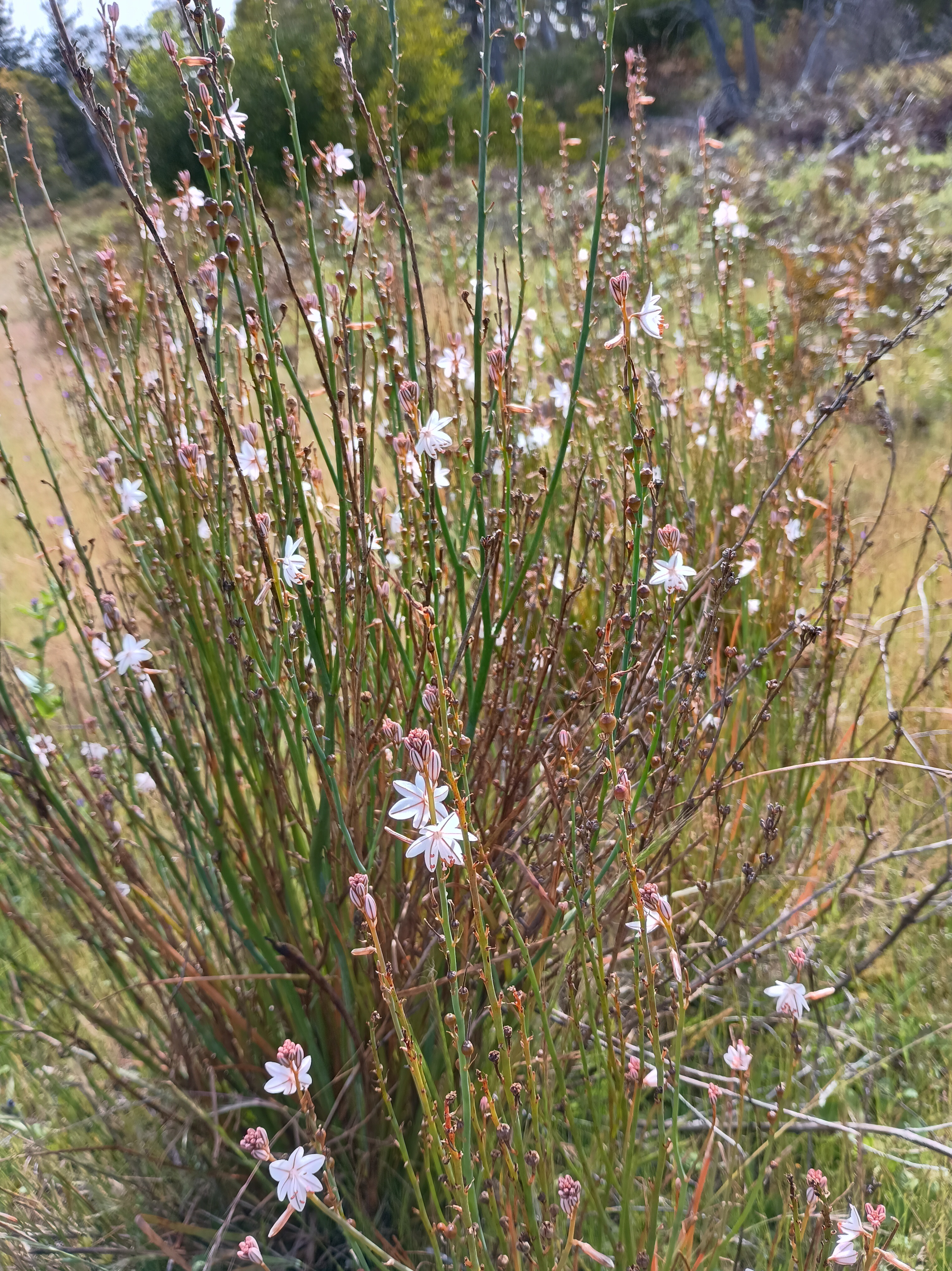
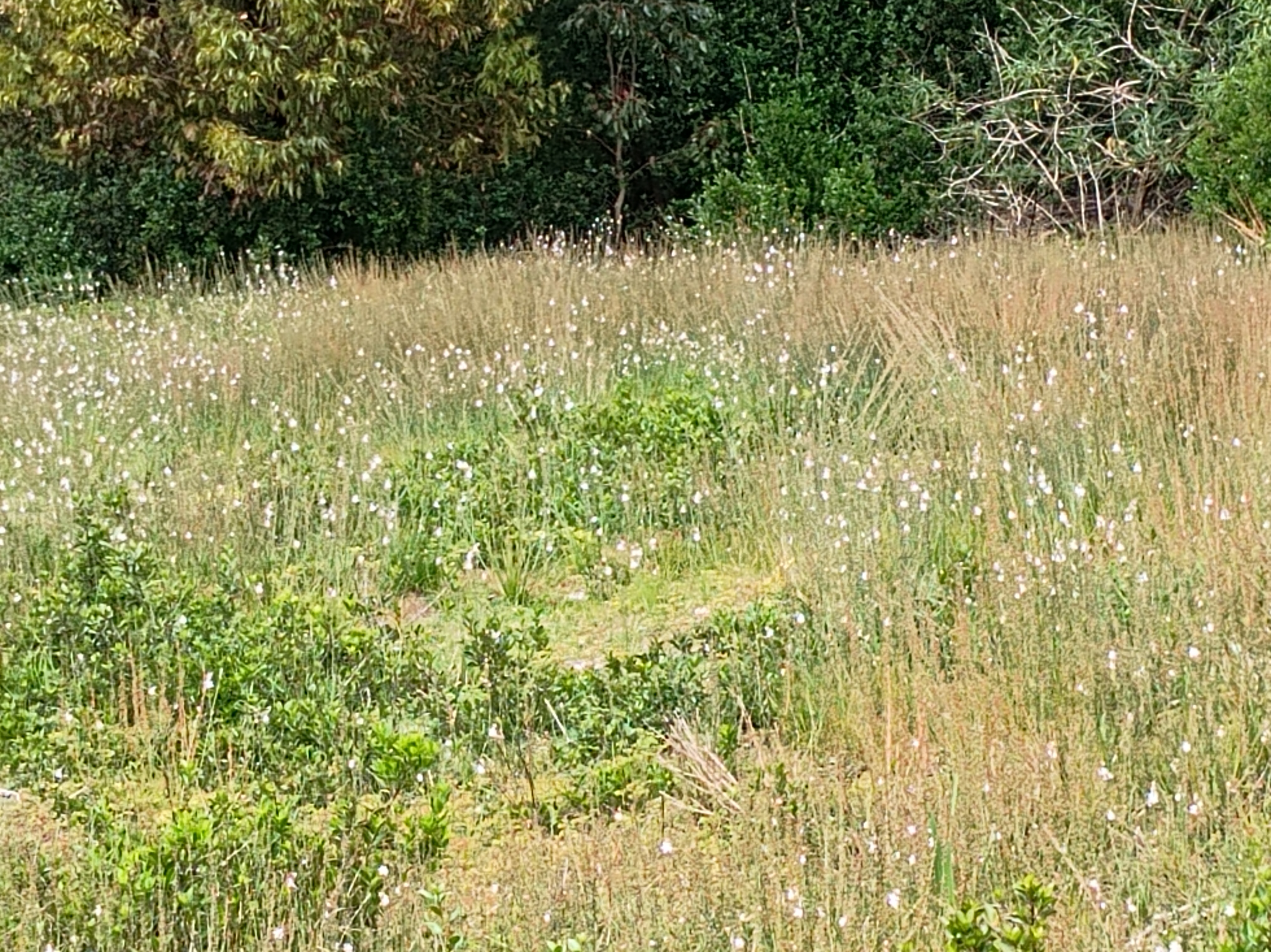
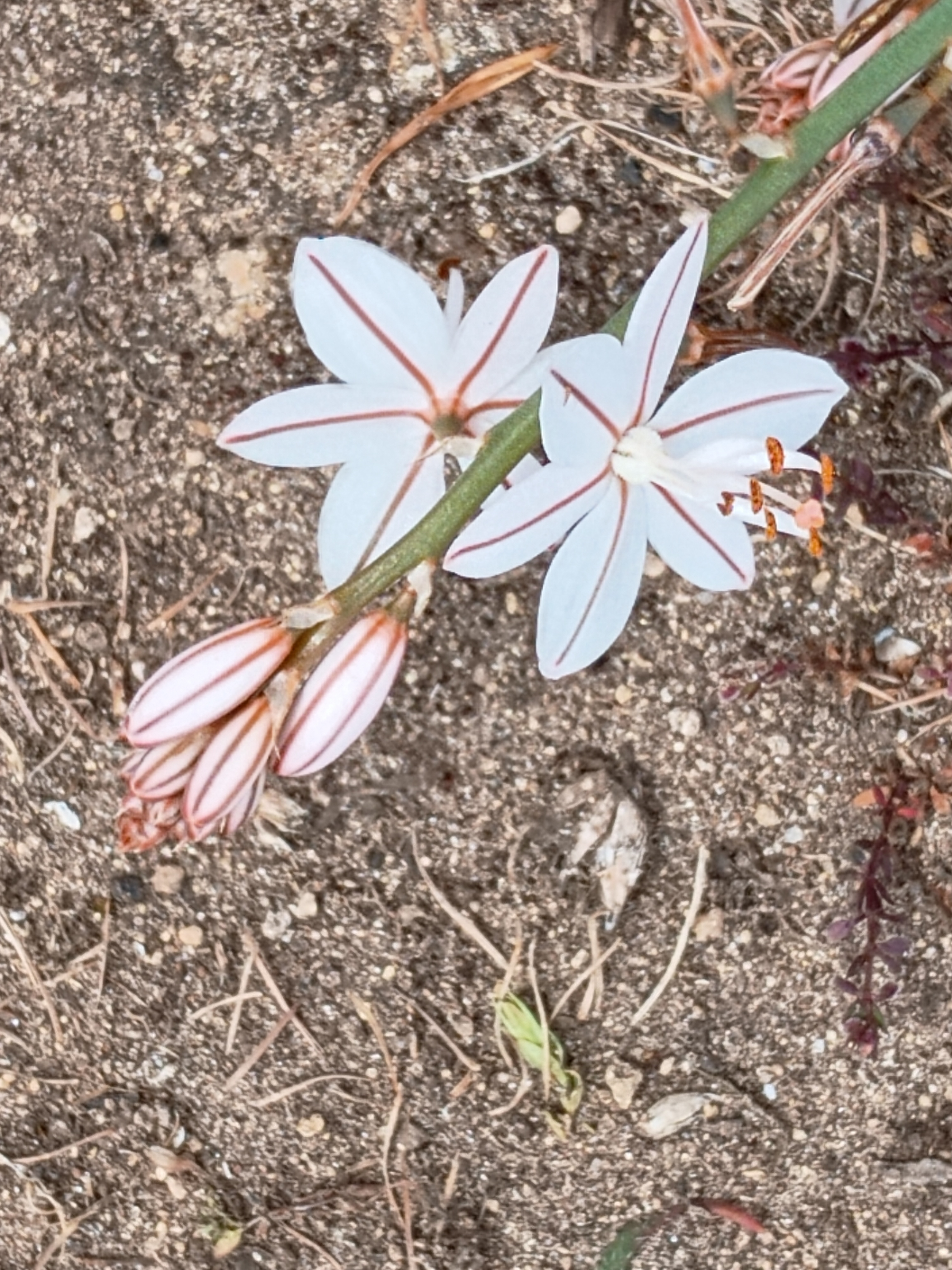
Photos by M Styles
West Australian Bluebell Creeper (Billardiera heterophylla) Status: Environmental weed
Still being sold as a garden ornamental, Bluebell creeper is an extremely invasive weed in woodlands and forests. The climber smothers native plants by out-competing them for sunlight or strangling them with their twining stems. Native to WA it is now an environmental weed in the south east states.
It is a twisting, evergreen shrub or climber growing to a height of 3–5 m. The leaf is shiny, oval or lance shaped, 5–7 cm long. Flowers form small clusters of mainly blue, bell-shaped flowers with five petals about 1 cm in size. Plants flower from spring to summer. Small fleshy fruit are tube shaped and up to 2 cm long. They begin green and ripen to blue-purple in summer and autumn. Each fruit contains more than 50 seeds. Roots are wide spreading and shallow.
Where to see some? North Nelson Road and Wade Street have some obvious specimens.
Treatment? Pull up or dig out seedlings and saplings. Cut or scrape the main stem (if you can find it!) and swab with herbicide. Spray leaves with a broad-leaf or non-selective herbicide.
NB. All herbicide use must be carried out according to the Manufacturer’s instructions and current Material Safety Data Sheet.
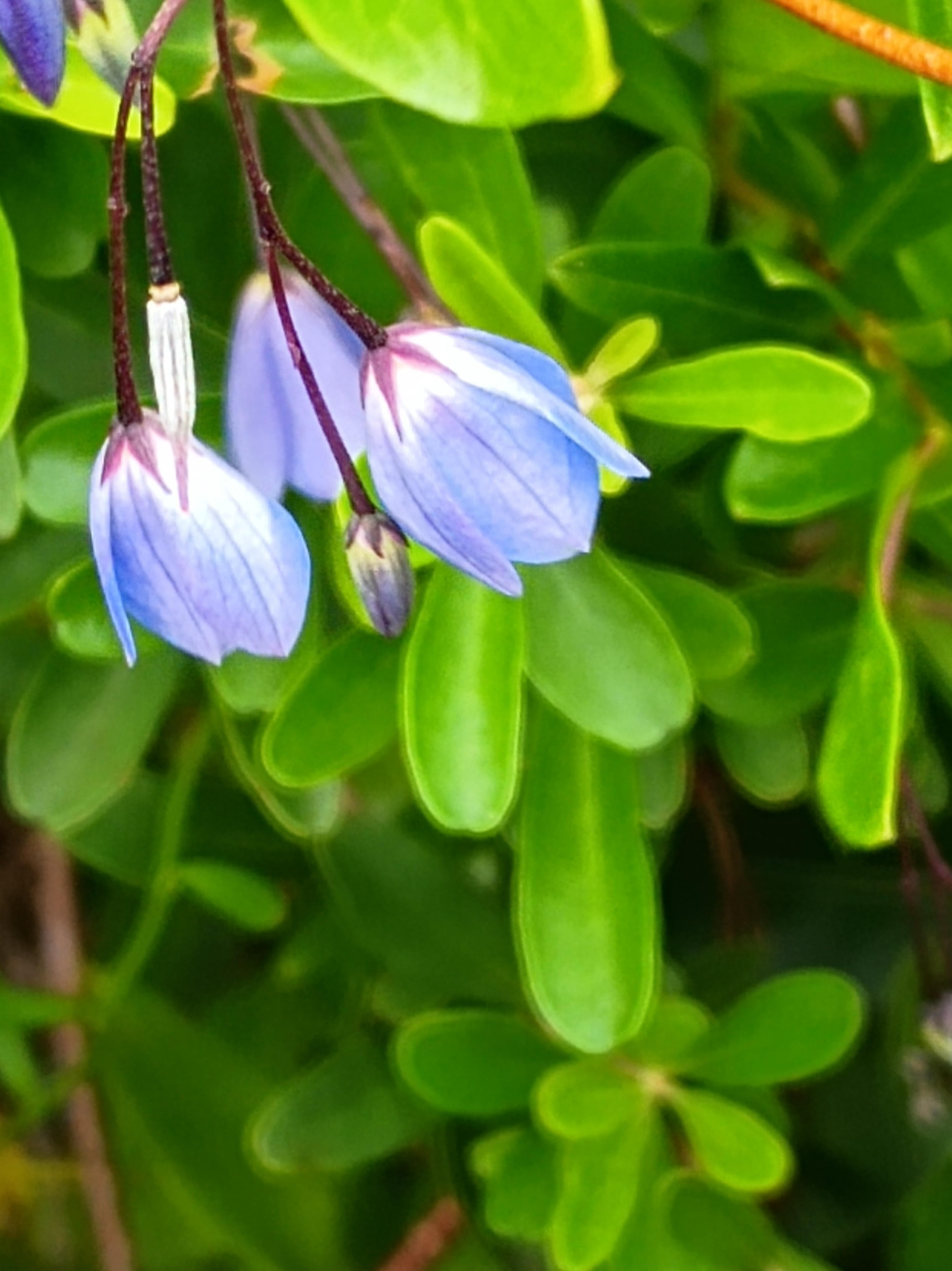
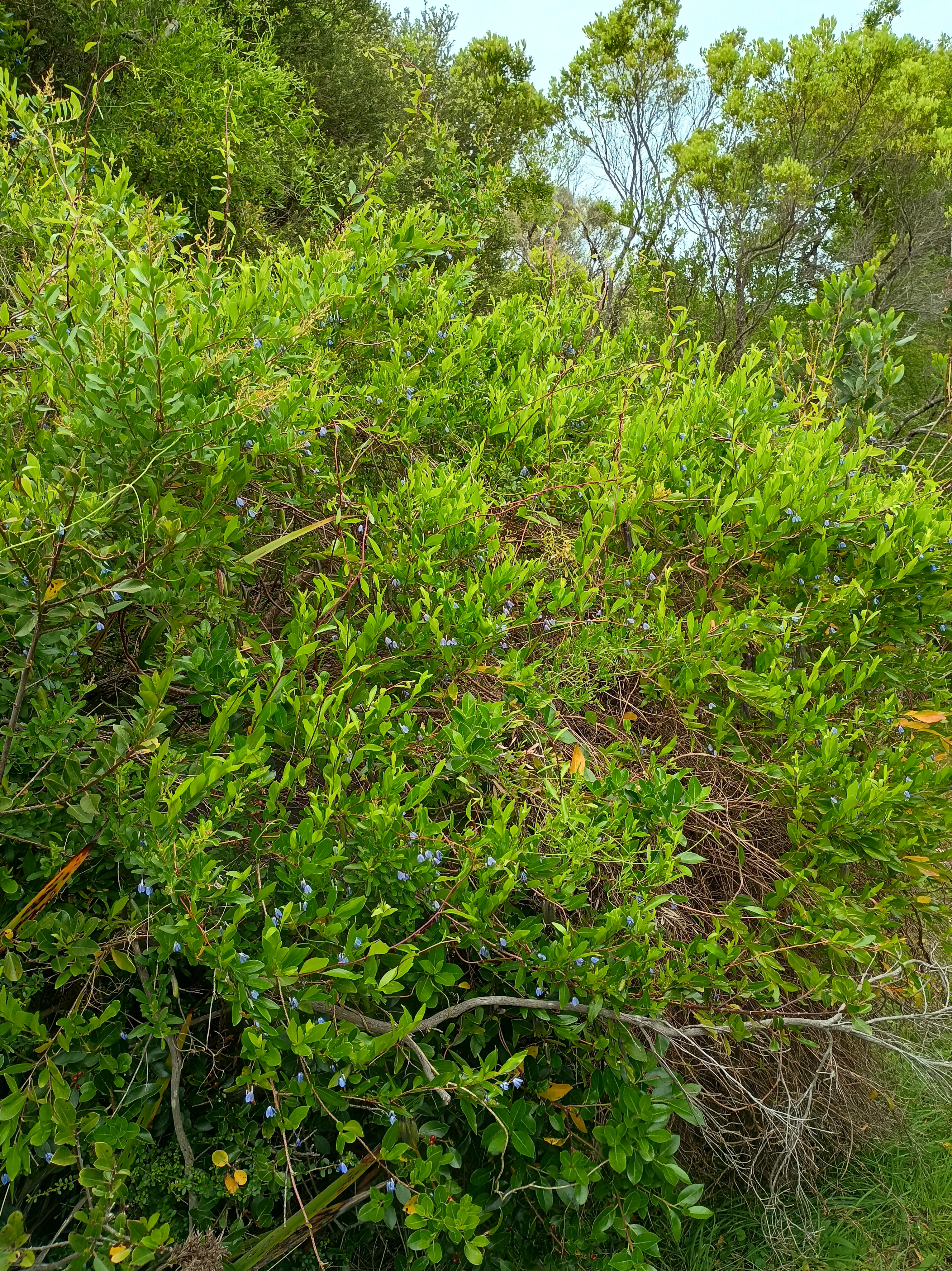
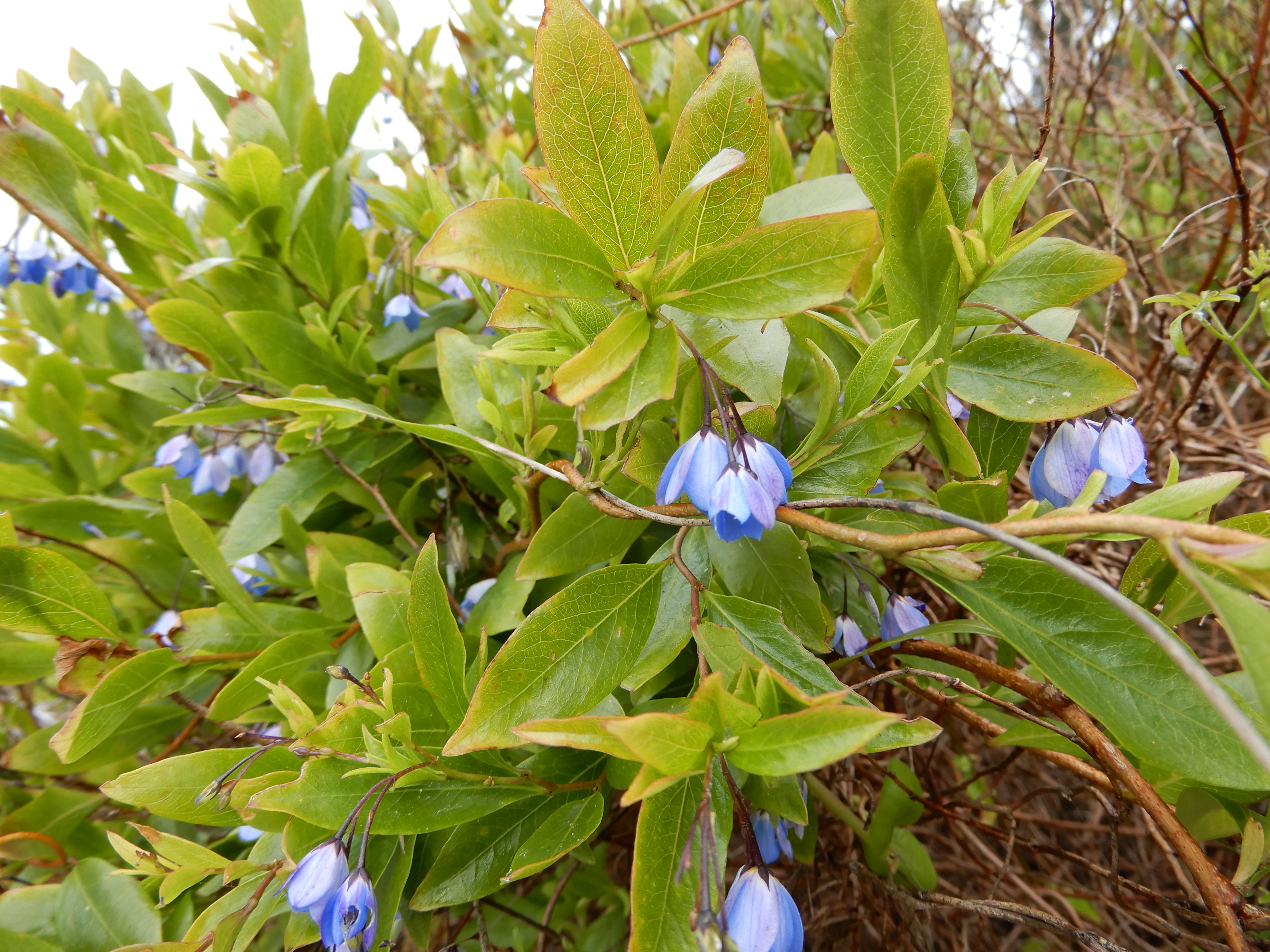
Photos by M Styles & C Young
References and Resources
https://www.ari.vic.gov.au/__data/assets/pdf_file/0027/125919/ARI-Technical-Report-287-Advisory-list-of-environmental-weeds-in-Victoria.pdf
https://agriculture.vic.gov.au/__data/assets/pdf_file/0003/538149/Victorian-noxious-weeds-list-by-scientific-name.pdf
https://www.glenelg.vic.gov.au/Our-Community/Environment/Pest-Plants-and-Animals/Weed-Identification-and-Control
https://www.ghcma.vic.gov.au/wp-content/uploads/2017/06/Weeds-of-the-Glenelg-Hopkins-catchment-low-res.pdf
https://www.environment.vic.gov.au/__data/assets/excel_doc/0027/563607/Advisory-list-of-environmental-weeds-in-Victoria_2022.xlsx
https://cdn.environment.sa.gov.au/landscape/docs/ki/pest-weed-fact-bluebell-creeper-21.pdf
 Nelson Coastcare
Leave a comment